

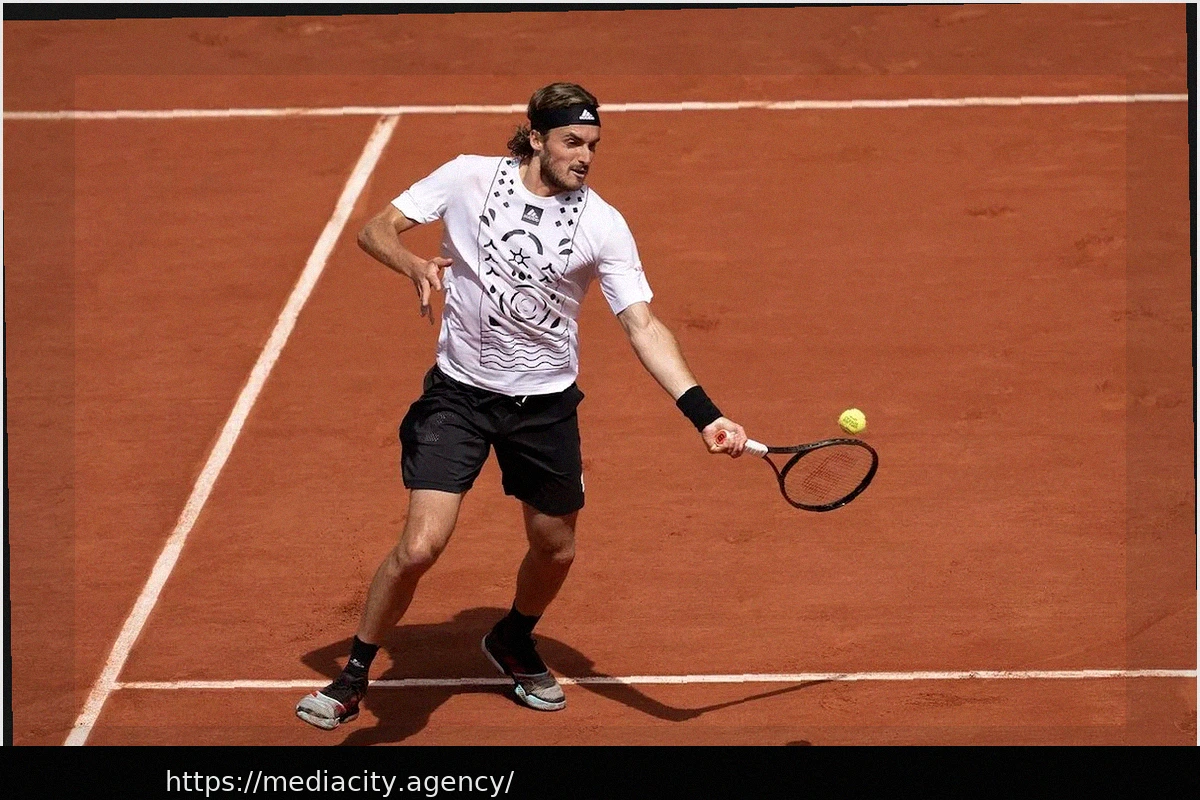
Following a resounding 6-0, 6-1 defeat to Arthur Fils in Miami last month, Stefanos Tsitsipas took to X with a hopeful message: “Taking the positives out of Miami and moving on to clay hungry and with a fresher mind. The journey back continues, see you in Monte-Carlo.”
The “journey back” to Monte-Carlo, a place deeply significant to Tsitsipas. It’s where his mother achieved a junior title in 1981, where he secured his inaugural Masters 1000 title in 2021 and repeated the success the following year. His triumphant return in 2024, clinching a third title, seemed to signal an end to his struggles. It takes considerable optimism to view being bagelled and breadsticked by a 21-year-old as an opportunity to glean positives.
However, his Monte-Carlo campaign ended in the first round. His ranking plummeted to #67, the lowest it’s been in eight years, a stark contrast to his #8 position at the same tournament a year prior. The intended journey back appears to be heading in the wrong direction.
How the Fall Happened
While Tsitsipas’s current predicament might seem abrupt, the data suggests a prolonged and steady deterioration. This decline has been gradual, consistent, and marked by deceptive highs that only amplified subsequent collapses.
He concluded the 2025 season outside the Top 30, his lowest year-end ranking since 2017. His Grand Slam record that year was a disappointing 2-4, including a retirement at Wimbledon. Throughout 2025, a persistent back injury undermined his physical foundation. The severity of this injury led him to question his career, recounting periods where he struggled to walk for two days post-match and debated the worth of enduring such pain. The Wimbledon withdrawal followed his public declaration of reaching his human limits.
He returned at the end of 2025, announcing his back had healed. The beginning of 2026 saw him win his United Cup matches, and he predictably declared he was feeling like his old self again. He defeated Alex de Minaur in Miami, marking his first consecutive Masters-level wins since the Monte-Carlo quarterfinals in April 2025. However, a subsequent 6-0, 6-1 loss to Fils in Miami quickly followed, leading to his familiar posts about fresh minds and eager clay-court performances.
The underlying pattern suggests a player whose performance level has become genuinely erratic, a situation not solely attributable to injury. In 2026, Tsitsipas has a 6-8 record in Tour-level events, with his best result being a quarterfinal in Doha. His Davis Cup victories were against opponents ranked 222nd and 818th. He can defeat de Minaur one day and then fail to win a set against Fils the next. He entered Monte-Carlo as a three-time champion and experienced an opening-round exit for the first time in eight appearances. These are the fluctuations of a player whose peak performances are still occasionally evident, but whose baseline has dropped to a level previously unimaginable.
His match against Francisco Cerundolo in Monte-Carlo clearly exemplified the issue. Tsitsipas led 5-3 in the first set but subsequently lost four consecutive games. In the second set, he was broken at 4-4 after staging a comeback from 0-4 down. This indicates a player struggling to close out leads. He establishes a strong position but then falters, either physically or mentally, when the match demands decisive execution. While his back issues undoubtedly contributed physically, his current struggles on the clay he knows so well, in a tournament where he has excelled for years, cannot be solely attributed to pain management.
He hasn’t secured three or more titles in a single season since 2019. He has reached two Grand Slam finals but hasn’t come close to adding to that tally since 2023. The younger generation of players, once his rivals, have now arrived. Cerundolo entered their Monte-Carlo encounter with 15 wins in 2026, including a title in Buenos Aires and a quarterfinal appearance in Miami. Tsitsipas should not be losing to him in the first round of Monte-Carlo, or at least, he shouldn’t have been two years ago. Now, the outcome speaks for itself.
What Grace Looks Like From Here
The title of this piece is inspired by Tsitsipas himself. In the autumn of 2025, after unfollowing everyone on Instagram, he explained his decision as an effort to detach from social media, prioritize his mental well-being, and educate younger individuals about the perils of seeking external validation. A commendable intention. He continued to share philosophical musings and motivational messages about journeys and fresh starts. His post following the Monte-Carlo loss read:
“I no longer react. I just vanish with grace and mentally write a haiku about it.”
While this sentiment is poetic, in tennis terms, “vanishing with grace” would involve a self-aware confrontation with the disparity between his past peak and his current capabilities. This gap is not necessarily insurmountable. At 27, he boasts 11 ATP titles and has reached World #3. He possesses the skill to defeat any opponent on clay on a given day, and his win over de Minaur in Miami demonstrated he can still access that level, albeit briefly.
However, brief flashes of form do not equate to sustained dominance. The evidence from the past 18 months suggests that these rare appearances of the old Tsitsipas are unpredictable, short-lived, and often followed by performances akin to those seen in Miami and Monte-Carlo.
He is now outside the Top 60 for the first time since April 2018, when he was a 19-year-old making his initial foray into the Top 100. He has failed to defend any of his significant clay-court points from the previous two years. With more ranking points to defend in Barcelona, Madrid, and Rome before Roland Garros, early exits in these tournaments could push him further into territory he hasn’t occupied in nearly a decade.
What Now
A peculiar aspect of Tsitsipas’s decline is the consistent self-narration accompanying it. Every defeat is reframed as a learning experience, every ranking drop as a stage in his journey, and every new tournament as an opportunity for a fresh perspective. He might be the most articulate chronicler of his own regression in tennis history, and his philosophical resilience in the face of repeated setbacks is almost admirable. After his Monte-Carlo loss, former player Arnaud Clement echoed the sentiments of many observers: a profound period of introspection is necessary, as even in a tournament where he has enjoyed significant success, he is simply unable to find his game.
The central question is not whether Tsitsipas still possesses the ability to play tennis – he does. The question is whether the player who triumphed in Monte-Carlo in 2024, signaling a potential comeback, was the authentic version of himself or an anomaly. The current evidence suggests the latter. This is not due to a lack of talent, which remains considerable, but rather because the physical consistency and competitive fortitude required to be a genuine contender in career-defining tournaments appear to have eluded him.
“Vanishing with grace” is an appealing concept, implying a deliberate, dignified withdrawal executed with style at the opportune moment. What Tsitsipas is experiencing seems less like a graceful exit and more like a gradual erosion, marked by successive first-round defeats, from a domain he clearly still believes is his. The journey back persists, yet it appears to be leading nowhere.