

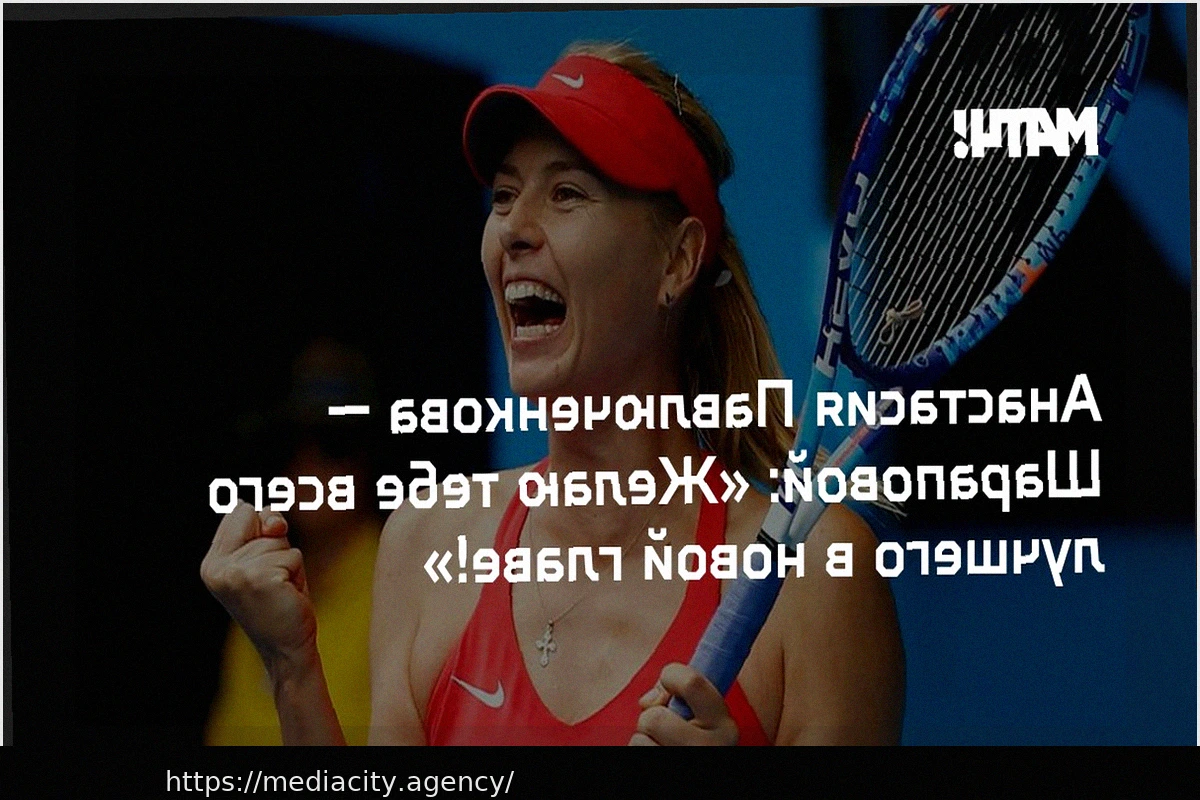
Russian tennis player Anastasia Pavlyuchenkova, in an interview with “SE,” commented on the dominance of Russian-speaking athletes on the world tour. She reminisced about playing doubles with Elena Rybakina and identified the primary quality that enabled Maria Sharapova to win five Grand Slam titles.
Anastasia Pavlyuchenkova on Maria Sharapova: “Maria’s Champion Mentality Amazed Me”
In a recent interview with “SE” (Sport-Express), prominent Russian tennis player Anastasia Pavlyuchenkova shared her insights on the current landscape of women’s tennis, particularly highlighting the strong presence of Russian-speaking athletes. She also reflected on her past experiences, including a doubles partnership with Elena Rybakina, and specifically praised Maria Sharapova, attributing her remarkable success – five Grand Slam victories – to a singular, defining characteristic.
Pavlyuchenkova expressed deep admiration for Sharapova’s competitive spirit, stating, “Maria’s champion mentality amazed me.” This “champion mentality” is, according to Pavlyuchenkova, the crucial element that set Sharapova apart and allowed her to achieve such a high level of success on the demanding professional tennis circuit. It speaks to Sharapova’s unwavering determination, resilience, and ability to perform under pressure, qualities that are essential for sustained dominance in Grand Slam tournaments.
The interview also touched upon the broader success of athletes from Russian-speaking countries in the global tennis arena. Pavlyuchenkova’s observations suggest a strong talent pool and effective development pathways within this demographic. Her mention of playing doubles with Elena Rybakina hints at the collaborative and competitive environment that may contribute to the growth of these athletes.
Ultimately, Pavlyuchenkova’s comments offer a valuable perspective on what it takes to reach the pinnacle of professional tennis, emphasizing the psychological fortitude and inherent drive that define a true champion, using Maria Sharapova as a prime example.