

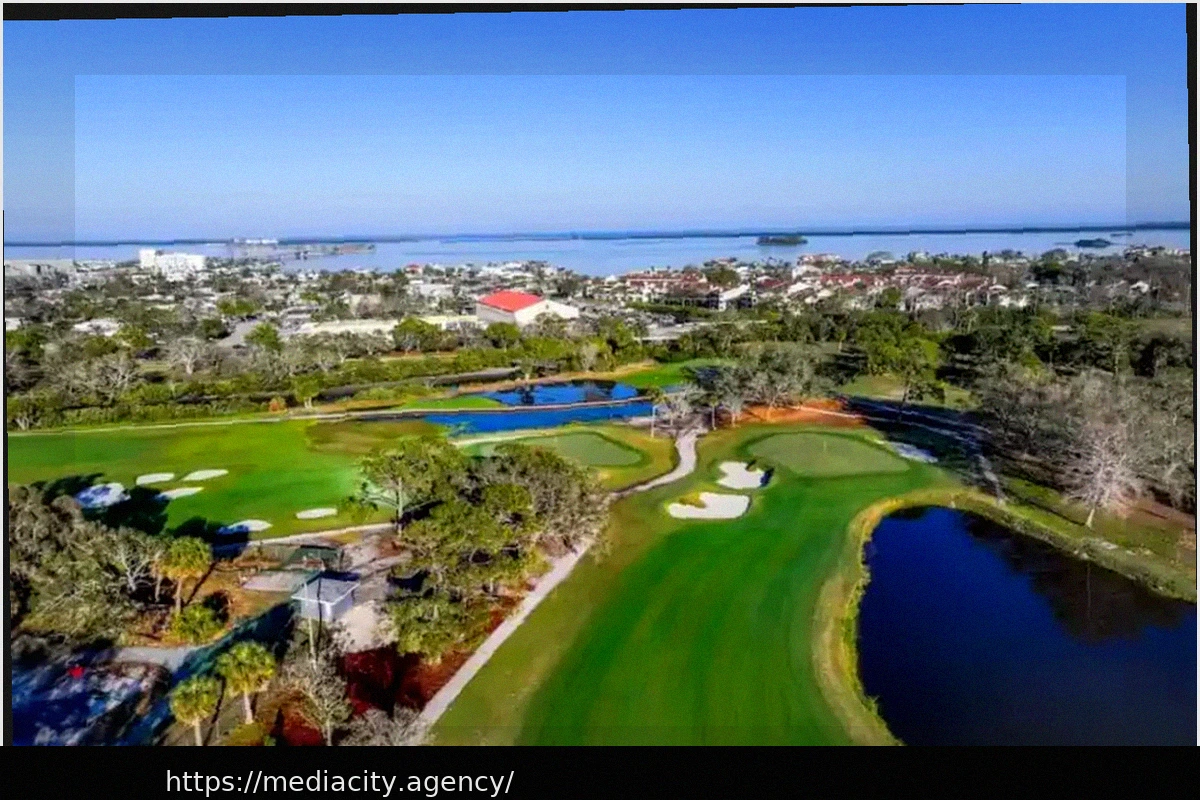
Nearly a century after its inception under the visionary design of Donald Ross, the Dunedin Golf Club, a historic municipal course nestled just north of Tampa, has triumphantly reclaimed its esteemed position among America’s finest public golf venues. This remarkable revival is the culmination of an exhaustive $6 million restoration, meticulously overseen by renowned Ross specialist Kris Spence. The outcome is a course imbued with an authenticity and precision rarely achieved in contemporary renovations, presenting golfers with a living testament to Ross’s architectural genius, precisely as he envisioned it.
Opened in 1927 as Dunedin Isles Golf Club, the course was always celebrated for its rolling topography, natural water features, and strategically placed hazards. Ross himself lauded the property’s “ideal combination” of elements, considering it one of his paramount creations. However, over decades, subsequent alterations gradually eroded the original design, leading to shrunken greens, modified bunkers, and a diluted strategic rigor that characterized Ross’s Golden Age philosophy.
The city’s commitment to a comprehensive restoration was not merely about aesthetics; it represented a profound dedication to historical accuracy, architectural integrity, and the revitalization of the community itself.
Unearthing Ross’s Vision: An Architectural Reclamation
For architect Kris Spence, the restoration of Dunedin Golf Club was akin to an archaeological excavation. Over time, the greens had diminished significantly, losing 35 to 50 percent of their original size and erasing the bold contours and precise pin placements crafted by Ross. Yet, what Spence unearthed beneath the surface proved to be a game-changer.
“As we peeled back the layers, we discovered the original greens buried but remarkably preserved,” Spence recounted. “It felt very much like an archaeological endeavor.”
This extraordinary finding enabled Spence and his team to meticulously reconstruct the greens, bunkers, and fairway contours with astonishing fidelity. The original shapes, slopes, and elevations—lost for over 75 years—were meticulously reinstated to their full, intended expression. The result is a course that once again champions creativity, precision, and the imaginative shot-making synonymous with Ross’s design principles.
Golfers will now encounter formidable, strategically positioned bunkers, intricate green complexes, and subtle topographical shifts that demand thoughtful approaches and adept short-game execution. The restoration proudly reintroduces the Scottish-influenced bump-and-run style that Ross brought to American golf, imbuing Dunedin Golf Club with a timeless and challenging playing character.
Harmonizing History with Modern Dynamics
While the restoration is deeply rooted in historical accuracy, it also thoughtfully addresses the realities of contemporary golf. Blair Kline, Dunedin’s General Manager of Golf Operations, acknowledges that Ross could not have foreseen today’s equipment advancements or accelerated green speeds.
“If Ross were to witness the distances balls travel today and the speed of our greens, I doubt he would design the exact same course,” Kline stated. “We now have the course we believe he would create in the present era.”
The course’s original routing has been preserved, though some bunkers were judiciously repositioned to accommodate modern playing distances. Crucially, all original pin placements have been recovered and restored, ensuring that the strategic essence of each hole remains undiluted. This careful balance yields a course that reveres its past while presenting a compelling and relevant challenge for today’s golfers.
A Monumental Stage in American Golf History
Dunedin Golf Club transcends being merely a beautifully restored Donald Ross design; it stands as a pivotal landmark in American golf history. In 1945, the PGA of America relocated its headquarters from Chicago to Dunedin, consequently renaming the course PGA National Golf Club. For nearly two decades, the club proudly hosted 18 consecutive Senior PGA Championships and notably staged the inaugural PGA Merchandise Show in 1954.
During this illustrious period, legends such as Bobby Jones, Gene Sarazen, Ben Hogan, Sam Snead, Louise Suggs, Babe Didrikson Zaharias, and Byron Nelson graced its fairways. The course solidified its status as a nexus for professional golf and a profound source of civic pride for the Dunedin community.
In 2014, Dunedin Golf Club earned its rightful place on the National Register of Historic Places, cementing its enduring legacy. The recent restoration, however, has breathed new vitality into that legacy, transforming the course into an essential destination for golfers seeking authentic Golden Age architectural brilliance.
A Premier Municipal Treasure Reborn
Today, Dunedin Golf Club proudly stands alongside Florida’s elite municipal courses, including the celebrated Winter Park Golf Course and The Park in West Palm Beach. With 18-hole rates ranging from $85 to $140—and attractive discounted rates for local residents—the course offers exceptional value, especially when compared to many of the region’s opulent resort destinations.
The restoration has also ignited renewed interest in Dunedin as a vibrant destination. “People are actively making plans to visit and play here,” Kline observed. “It’s significantly boosting Dunedin’s visibility among those who might not yet appreciate the true charm of this community.”
Local businesses, tourism, and community spirit have all reaped the benefits of this successful project. The course has once again become a central emblem of Dunedin’s identity—a vital asset that seamlessly links the city’s rich past with its promising future.
A Masterpiece Preserved for Future Generations
Nearly a century after Donald Ross first surveyed its grounds, Dunedin Golf Club has been painstakingly restored to the magnificent vision he originally conceived. Thanks to the unwavering commitment of the city and Spence’s meticulous artistry, golfers can now experience a Ross masterpiece in its most authentic and pure form.
The course that once profoundly shaped golf history is now poised to shape it anew—one meticulously restored green, one thoughtfully revived bunker, and one unforgettable round at a time.