

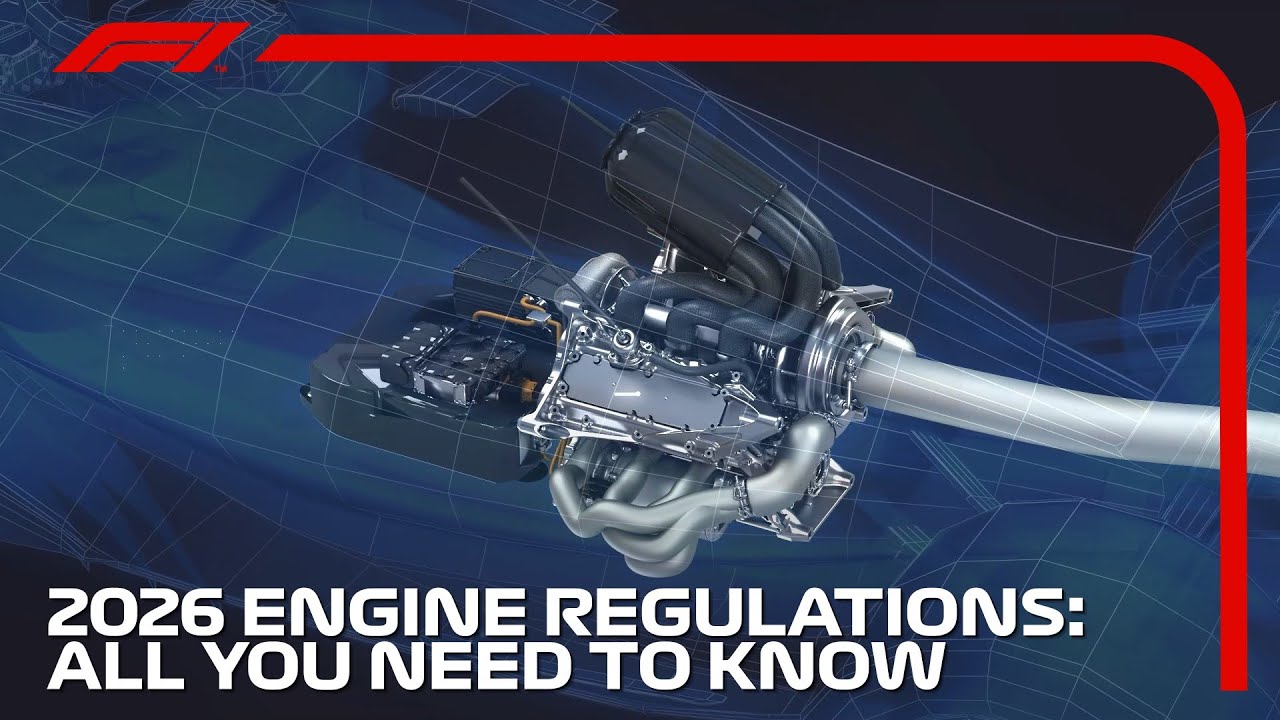
With the 2025 Formula 1 season drawing to a close, attention is firmly shifting to 2026, which is universally regarded as a landmark year for the sport due to a massive overhaul of technical regulations.
What is Changing in F1 2026?
The changes are extensive, involving a complete revamp of rules concerning the power unit, chassis, and aerodynamics. These fundamental shifts mean the cars debuting in 2026 will be drastically different from their predecessors.
New regulations almost inevitably cause a shake-up in the competitive hierarchy. F1 experts, including Martin Brundle, have labeled these rules as among the “biggest changes ever” introduced to the sport.
Teams have been working intensely on their 2026 designs because the rules are intended to stabilize the sport for five consecutive seasons. Securing a competitive advantage from the start will be crucial for sustained success, much like Mercedes’ engine dominance that began in 2014.
Power Unit Overhaul
F1’s new power unit architecture will place much greater reliance on electrical energy. The goal is a near 50-50 split between electric power and the internal combustion engine (ICE), resulting in approximately a 300% increase in electrical power deployment.
While the internal combustion component remains the familiar 1.6-litre V6 turbo utilized since 2014, significant auxiliary components are being eliminated, most notably the MGU-H (Motor Generator Unit – Heat).
This radical shift suggests we are likely to see significant performance disparities between manufacturers, and potentially a return to reliability issues, particularly in the initial phases of the season.
Andy Cowell, former Mercedes engine guru and current Aston Martin chief strategy officer, highlighted the difficulty of balancing performance and durability: “All of these parameters are traded off. There are compromises in order to come up with the fastest race car. And we’re still many months away from the introduction point.”
He added that every engineering team is currently pushing to incorporate new ideas while simultaneously battling reliability: “The supply chain will be screaming because you’re asking for both performance and reliability. You just push really, really hard – and every single minute of every day counts.”

New Engine Manufacturers and Team Lineups
The FIA credits the new engine regulations, which are designed to maintain some relevance to road car technology, for attracting six major power unit manufacturers: Ferrari, Mercedes, Renault, Honda, Audi, and Red Bull Powertrains.
Perhaps the most compelling change is Red Bull developing its first bespoke engine. Red Bull Powertrains (formed in 2021) is partnering with Ford for this venture, which will also supply their junior team, Racing Bulls. Both teams currently use Honda-supported units.
Audi will join the grid by taking over the Sauber team, facing an immediate challenge but benefiting from existing team personnel. Meanwhile, Honda will depart Red Bull to become the exclusive supplier for Aston Martin, creating high expectations given the recent strength of the Honda engine.
New team entry Cadillac is set to utilize Ferrari power units and gearboxes until at least the end of the 2028 season, with aspirations of eventually developing their own power unit.
F1 2026 Teams and Engine Suppliers
| Team | Engine |
|---|---|
| McLaren | Mercedes |
| Mercedes | Mercedes |
| Red Bull | Red Bull-Ford |
| Ferrari | Ferrari |
| Williams | Mercedes |
| Haas | Ferrari |
| Aston Martin | Honda |
| Racing Bulls | Red Bull-Ford |
| Alpine | Mercedes |
| Audi | Audi |
| Cadillac | Ferrari |
 Marcus Prine