

Historically, tennis operated on a foundation of trust, accepting the umpire’s final decision and the inherent imperfections of human line calls. Players often had to simply grimace and move on, embracing a certain fatalism that prioritized uninterrupted competition over absolute perfection. This dynamic formed a unique purity in the sport.
However, technology inevitably intervened. First came Hawk-Eye, largely resolving the issue of incorrect line calls. More recently, video review, introduced across all ATP and WTA Masters 1000 tournaments since early last year, promised to extend this precision to hindrances and foul shots. While the initial concept appeared sound, its implementation is progressively unraveling into a slow-motion catastrophe.
A recent incident at Indian Wells on Stadium 2 provided the starkest illustration of this system being stretched beyond its intended purpose, now accommodating retroactive grievances rather than clear-cut errors.
The Moment That Triggered Widespread Concern
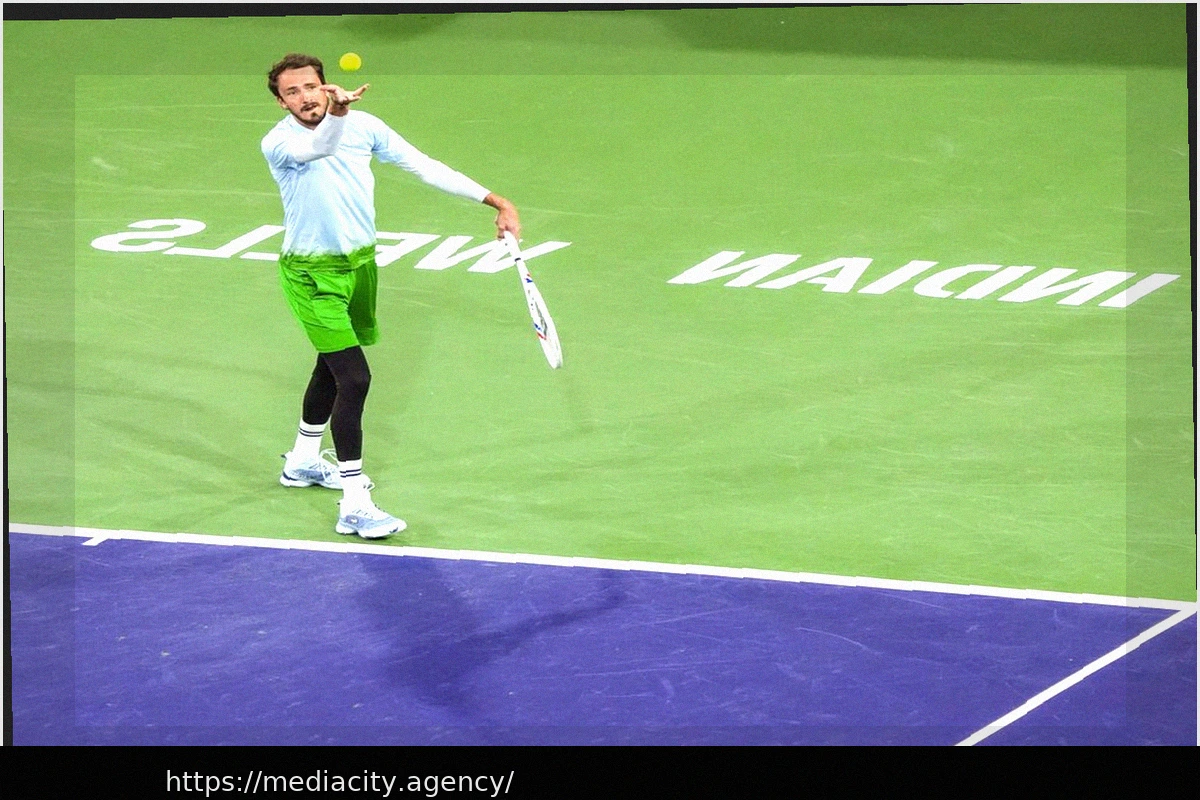
The pivotal moment occurred during a match between Daniil Medvedev and Jack Draper, with Medvedev leading 6-1 and the second set tied at 5-5, Draper serving at 0-15. During a rally, Medvedev returned a shot and immediately raised his arms, believing Draper’s ball was out. Despite this gesture, the point continued for three more shots before Medvedev netted the ball, ostensibly losing the point.
What followed transformed a routine point loss into a major tournament controversy. Instead of proceeding to the next serve, Medvedev appealed to chair umpire Aurelie Tourte, requesting a hindrance call. He argued that Draper’s mid-rally gesture had distracted him. After reviewing the footage, Tourte incredibly ruled in Medvedev’s favour, stating Draper’s movement was an abnormal deviation that warranted the call.
The Californian crowd reacted with palpable hostility, showering Medvedev with boos at the changeover and again after he secured the match. To his immense credit, Draper maintained his composure while meticulously dissecting the decision’s flawed logic.
He logically pointed out to Tourte that players frequently raise their arms mid-rally, that the alleged distraction couldn’t have been severe given the continuation of two more shots, and that the call bore little resemblance to the on-court reality. At the net, Draper was gracious but firm, congratulating Medvedev yet making it clear he did not believe the gesture caused any genuine disruption.
Medvedev, for his part, didn’t pretend otherwise. He admitted post-match that the distraction was minor and he didn’t feel particularly good about the outcome, but he had merely utilized an existing rule, leaving the final decision to the umpire. His actions, while within the system’s bounds, underscore the system’s inherent flaw.
The Problem of Outcome-Dependent Challenges
The fundamental flaw at the heart of this rule was best articulated by Aryna Sabalenka after her own semifinal victory that same weekend. The world number one zeroed in on the procedure’s inherent absurdity: a player can complete an entire point, lose it, and only then request a hindrance review. Sabalenka argued that if a distraction were truly debilitating, the affected player would stop play immediately, not continue rallying for multiple shots.
The fact that a player waits for the point’s outcome before determining whether they were sufficiently disturbed reveals everything about the true nature of such complaints. Had Medvedev won the point, no review would have been sought; the “distraction” would presumably have been insignificant.
This observation critically undermines the entire premise of the rule. It renders the system outcome-dependent, meaning it has less to do with genuine distraction and everything to do with gaining a strategic advantage.
The parallels to football’s VAR (Video Assistant Referee) technology are both insightful and damning. VAR was introduced to correct “clear and obvious errors” but instead cultivated a culture of constant retroactive scrutiny, leading to goals disallowed for millimetric offsides and decisions reviewed long after the emotional intensity of the moment had passed. It has not made football significantly fairer; rather, it has made it more litigious, more paranoid, and considerably less enjoyable for viewers.
Former Australian professional John Millman voiced the growing frustration on social media, observing an excessive number of hindrance calls due to video review and urging the ATP and WTA to intervene before the issue escalates further. The argument for change is straightforward; the complexity, it appears, is political.
Two Manifestations of the Same Malfunction
Sabalenka herself experienced the rule’s awkwardness from the other side at the Australian Open when a chair umpire called hindrance against her mid-rally for an unusual double-grunt during a point against Svitolina. By her account, the call was unexpected and puzzled everyone on court, including Svitolina, who seemed visibly confused by the interruption.
These represent two different applications of the same malfunctioning tool: one where the umpire intervenes uninvited over a noise that surprised no one, and another where a player waits for the outcome before complaining about a gesture that caused no discernible disruption. Neither scenario inspires confidence, and both contribute to eroding trust in the sport’s integrity.
A Clear Solution
The answer is not to abolish video review, which serves a genuine purpose in clear-cut hindrance situations (e.g., deliberate, flagrant disruption). Instead, a simple procedural requirement is needed: if a player believes they were hindered, they must stop play immediately and vocalize it. They should not be allowed to play several more shots, lose the point, and then lodge a complaint. The rule requires a temporal boundary, demanding that the claim of distraction and the experience of distraction occur concurrently, rather than being conveniently separated by the loss of a rally.
Draper, exhausted from beating Djokovic less than 24 hours prior, lost the break, his serve, and ultimately the match. He will drop out of the top 20 in the rankings. Whether the controversial hindrance call definitively altered the outcome remains unknowable, especially as Medvedev was dominant throughout the first set. However, this is precisely the critical point: in the most crucial moments of the biggest tournaments, no one should be left questioning whether a result was swayed by a rule that even its beneficiary finds problematic.
Tennis has cultivated a reputation over decades for its unusually strong moral code, which includes traditions like players calling their own shots out, gracefully accepting adverse line calls, and showing genuine sportsmanship. This cherished culture deserves rigorous protection.
A rule that permits players to complete a point, ascertain their loss, and then retroactively claim distraction is fundamentally incompatible with this culture. Unfortunately, it aligns perfectly with the incentive structures of elite sport, which is precisely why the tour leadership must close this loophole before more tournaments become memorable for contentious video review decisions rather than for the brilliance displayed on court.
The technology itself is not the adversary; the procedure is. It is imperative to fix the procedure.