

Recent revelations have confirmed long-held suspicions: Saudi Arabia’s sovereign investment fund, PIF (Public Investment Fund), is reportedly targeting the acquisition of tournament licenses for established events like Acapulco and Buenos Aires. The strategic intent is clear – to eliminate these popular tournaments, freeing up calendar space for an expanded Saudi presence in professional tennis. This development has triggered widespread public outrage, with fans mourning the potential loss of culturally rich events and critics raising concerns about “sportswashing.” While the fan community’s anger is understandable, the article posits that their sentiments hold little sway with the sport’s influential figures, who prioritize different metrics for success.
Financial Imperatives Driving Saudi Influence
While contentious, the increasing integration of Saudi Arabia into professional tennis is, by the predominant standards of sports governing bodies and players, highly beneficial. This reality coexists with valid criticisms that it harms the fan experience, erodes the sport’s cultural essence, and threatens beloved, atmospheric tournaments. Yet, these negative aspects typically don’t dictate strategic decisions in professional sports; financial considerations do.
The Public Investment Fund (PIF) has already secured the rights for a new Masters 1000 event in Riyadh, set to debut in 2028. This landmark addition marks the first new top-tier tournament since the Masters 1000 category was established in 1990. The financial benefits extend further, including substantial funding for an ATP buyback pool. This mechanism allows the tour to reclaim licenses from current events and compensate existing members for accommodating a new entrant. Consequently, Saudi investment not only establishes new tournaments but also injects crucial financial stability across the entire tennis calendar, addressing commercial fragilities that have persisted for decades.
Player Endorsement Through Participation
Professional players quickly grasped the financial advantages even before administrators. The “Six Kings Slam,” an exhibition held in Riyadh last October, showcased this clearly. It quickly became the sport’s most lucrative non-Grand Slam event, with each participant receiving a guaranteed $1.5 million just for appearing, and the winner claiming a total of $6 million—a prize exceeding even the highest Grand Slam payouts, including the $5 million won at the 2025 US Open.
Players like Carlos Alcaraz openly admitted their financial motivations: “If I say I went there just for fun and to forget the money, I’m gonna lie.” Taylor Fritz was even more direct, challenging anyone to “show me a tournament where you can go play three matches… and potentially make $6 million.”
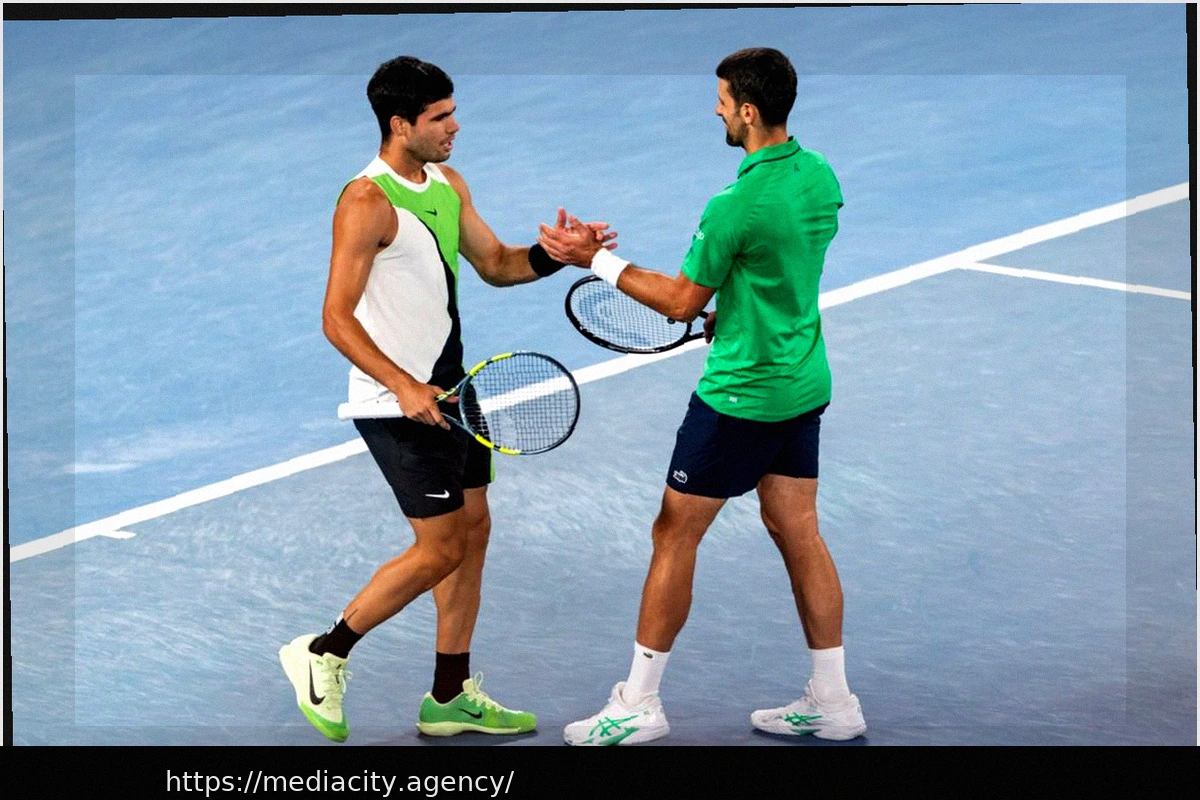
The participation of top players—Sinner, Alcaraz, Djokovic, Fritz, Zverev, Tsitsipas—without any boycotts or public expressions of discomfort over human rights issues, effectively silenced any notion that player moral reservations might hinder Saudi expansion. They played, collected their earnings, and left, signifying a clear acceptance of the financial benefits.
WTA’s Strategic Decision for Parity
The WTA Tour made a similar, albeit less publicized but equally impactful, decision. The 2024 WTA Finals were relocated to Riyadh, boasting a $15.25 million prize pool – a substantial 69% increase from the previous year. This move ignited significant controversy, given Saudi Arabia’s well-documented human rights record, particularly concerning women’s rights. Critics argued that hosting a major women’s sporting event there would legitimize the regime and undermine women’s rights activists.
Nevertheless, all eight of the top-ranked women players participated. Prize money for the 2025 WTA Finals is projected to reach $15.5 million, with further increases anticipated for 2026. For the WTA, which has historically struggled to achieve prize money parity with the men’s tour, Saudi Arabia emerged as the sole partner prepared to bridge this financial gap rapidly and unconditionally. A significant portion of the record $249 million in total WTA prize money for 2025, marking a 13% annual increase, is attributable to Saudi funding.
While moral objections to this partnership are understandable and widely held, one faces a dilemma: advocating for rapid pay equality in women’s tennis while simultaneously rejecting the only entity providing the necessary financial impetus to achieve it.
The Unavoidable Cultural Sacrifice
The tangible cost of this expansion will likely be the potential loss of tournaments like Acapulco and Buenos Aires. These events are widely celebrated for their electrifying atmosphere, passionate fan bases, and cultural significance. The Buenos Aires crowd, with its deep-seated South American clay-court tradition, offers an authentic experience that money simply cannot recreate.
Similarly, the devoted Mexican fans at Acapulco have consistently generated an unparalleled ambiance, transforming individual player successes into national celebrations—a cultural asset that many major tournaments would covet. Yet, the sport appears prepared to sacrifice these vibrant cultural hubs for a February Masters slot in a location where attendance is often dominated by corporate invitees, lacking genuine grassroots enthusiasm.
Players, while perhaps acknowledging the atmospheric impact of such crowds, are unlikely to actively oppose these changes, boycott events, or risk their lucrative affiliations with the Saudi entity that has recently delivered unprecedented financial opportunities, such as the Six Kings Slam. ATP Chairman Andrea Gaudenzi’s vision for a February Middle East swing, centered around the Saudi event, clearly indicates that the fan bases of Buenos Aires and Acapulco are not central to this strategic calendar optimization but rather perceived as expendable.
A Substantially Completed Takeover
Evidence suggests that the Saudi influence in tennis is not merely growing but largely cemented. The PIF is already the naming-rights sponsor for both ATP and WTA rankings, has forged strategic alliances with prominent Masters events like Indian Wells, Miami, and Madrid, and sponsors the Next Gen ATP Finals in Jeddah through 2027. With figures like Rafael Nadal serving as ambassadors for the Saudi Tennis Federation, the pervasive involvement is undeniable. This isn’t an unfolding takeover; it’s a nearly concluded one, revealed progressively through each new confirmed acquisition.
The Lingering Ethical Dilemma
The financial benefits of Saudi investment for tennis are, by the sport’s internal metrics—prize money, calendar structure, infrastructure, and commercial deals—unquestionable. The critical debate, however, shifts to whether these financial terms are the only ones that truly matter. Can a sport sacrifice its most passionate fan bases and relocate its most vibrant events to a different cultural landscape, yet still claim to be the same sport?
Ultimately, loyal fans, such as those who invigorated Acapulco and Buenos Aires with their unparalleled enthusiasm and emotional investment, will bear the brunt of these decisions, made without their input or consideration. While players received their substantial appearance fees, and tours secured their expansion funds and new tournaments, the Saudi sovereign wealth fund achieved its strategic objectives. Meanwhile, tennis, in essence, is migrating towards Riyadh, with its fundamental character and cultural identity potentially undergoing a profound transformation.