

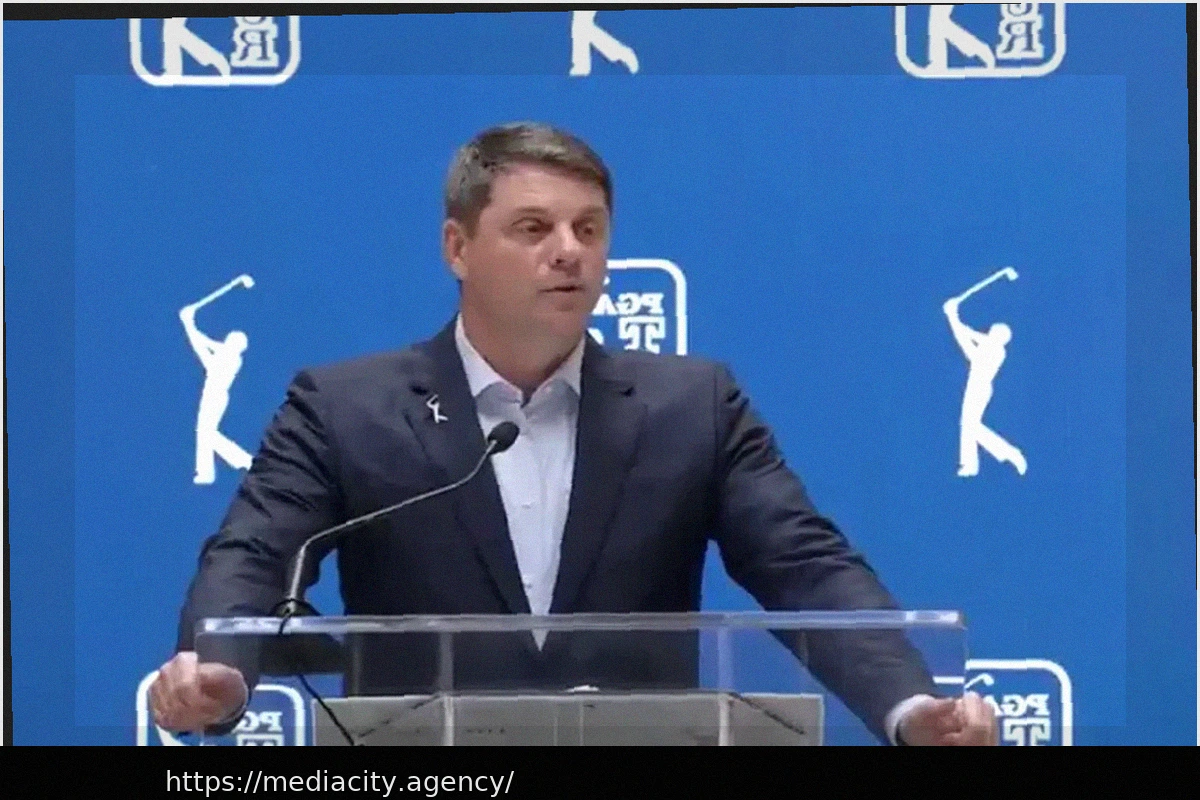
During an event at the PGA Tour’s new Global Home headquarters, CEO Brian Rolapp unveiled a strategic vision for a “two-tier” system. This new structure aims to foster a sense of “exclusivity” and guarantee that top-tier players frequently compete against each other.
Rolapp’s presentation and subsequent news conference, held just before the Players Championship began, indicated that the Tour is contemplating a significant structural transformation, departing from its historical approach of gradual adjustments.
In his approximately 40-minute “state-of-the-tour” press conference, Rolapp emphasized in his opening statements that “no final decisions have yet been made.”
Six Strategic Pillars Revealed
These proposed modifications, developed by the Future Competition Committee led by Tiger Woods, are slated for full implementation by 2028, though certain elements might be introduced as early as the upcoming season.
Rolapp also assured that the Tour “will not surprise anyone” with these changes.
Rolapp’s strategic framework rests on six key pillars: establishing two distinct event tracks, expanding field sizes to reintroduce cuts, relocating more events to major markets, implementing a promotion and relegation system for players, enhancing the postseason format, and initiating the revamped season with what he called “a marquee event at an iconic venue in the west.”
Keeping “Track of It All”
The current preferred model outlines a primary, elite tournament schedule comprising 21 to 26 events reserved for the premier players. This schedule would encompass the four major championships, The Players Championship, three postseason events, and an enlarged roster of 16 signature events, effectively doubling the present quantity.
The secondary track would consist of a parallel series of tournaments, offering players a merit-based pathway to qualify for the “elevated” primary track.
Inspired by European football leagues, the Tour plans to implement a formal promotion and relegation system between these two tracks, aiming to maintain intense competition across the entire season.
Rolapp also confirmed that existing circuits like the Korn Ferry Tour and PGA Tour Americas will remain important components of the Tour’s overall structure.
In a move likely to be well-received, particularly after recent “no-cut” signature events, Rolapp proposed increasing field sizes—ideally to 120 players—and reintroducing 36-hole cuts to ensure tournaments retain significance throughout their duration.
The CEO identified an opportunity to shift more events to prominent U.S. media markets like New York, Chicago, Philadelphia, San Francisco, and Boston, highlighting that the Tour presently operates in only four of the ten largest markets.
The Tour is also exploring the integration of match play into the postseason or the Tour Championship, aiming to generate high-stakes, “win-or-go-home” moments.
Schedule Compression
Although the plans are still in development, the “First Track” schedule is envisioned to be condensed, running from late January to early September. This aims to establish a more distinct season, akin to other major professional sports. While various formats are being considered, Rolapp confirmed that The Players Championship will maintain its traditional March slot.