

The radio program Fem Història from Radio Puigcerdà—recorded on March 14, 2026, just before the decisive fifth semifinal matches of the National Ice Hockey League—once again proved its indispensable role in understanding the history of this sport in Spain.
Hosted by Ángel Tornero and also available on platforms like iVoox, the show offers a journey into the past through testimonials, memories, and key figures. This particular episode centered on José Manuel Jarne from Jaca. However, true to Jarne’s humble spirit, which shunned individual limelight, the program expanded to paint a much broader picture: the genesis and entrenchment of the historic rivalry between CH Jaca and CG Puigcerdà during the 1980s.

A Tribute That Transcends the Individual
An interview with David Jarne, son of the former player, serves as the starting point for reconstructing a pivotal era in Spanish ice hockey. Far from solely focusing on his father’s personal career, the narrative broadens to encompass a generation that transformed the sport across Spain, particularly in the Pyrenees.
“‘Players whose careers were short-lived or cut short are not always remembered,’ David explains on the program. His testimony not only revives his father’s memory but also highlights an entire generation that laid the groundwork for the growth of national hockey from its roots.”
José Manuel Jarne thus emerges as a symbol: an intelligent, versatile, and deeply respected player, both for his athletic performance and his human qualities. Teammates from that era recall him as a protector of younger players, someone who prioritized the team above any individual.
The 80s: A Paradigm Shift
The program spotlights a crucial historical moment. Until the late 1970s, Spanish ice hockey was dominated by Basque Country teams such as Casco Viejo, Vizcaya, and Real Sociedad (now Txuri Urdin). However, a shift was underway in the Pyrenees.
The opening of new rinks, the development of local youth academies, and the involvement of small but passionate communities allowed new competitive centers to emerge. In this context, Club Hielo Jaca and CG Puigcerdà began an ascent that would ultimately define an era.
Jaca opted for a model focused on developing local players, a philosophy that would eventually become its hallmark. Puigcerdà, conversely, evolved into a mixed model, integrating foreign talent and capitalizing on opportunities such as the disappearance of FC Barcelona’s ice hockey section in the 1980s.
The Birth of the Pyrenean Classic
The 1983-84 season marked the definitive turning point. Both teams finished the League’s final phase tied, forcing the championship to be decided by goal difference in their direct confrontations.
The outcome was as symbolic as it was dramatic: the title was decided in Puigcerdà, with a home victory that was still insufficient to wrest the championship from Jaca. That night not only crowned the Aragonese team as senior champions for the first time but also gave birth to the “Pyrenean Classic.”
“‘It was an incredibly contested league, with two teams that fought until the very end,’ the protagonists recall on the program. Beyond the result, what truly resonated was the competitive intensity and the atmosphere in the stands.”
A Rivalry Forged on Ice… and Passion
One of the program’s most engaging aspects is its portrayal of the rivalry between Jaca and Puigcerdà. Far from falling into clichés, it presents a complex phenomenon with both bright and dark sides.
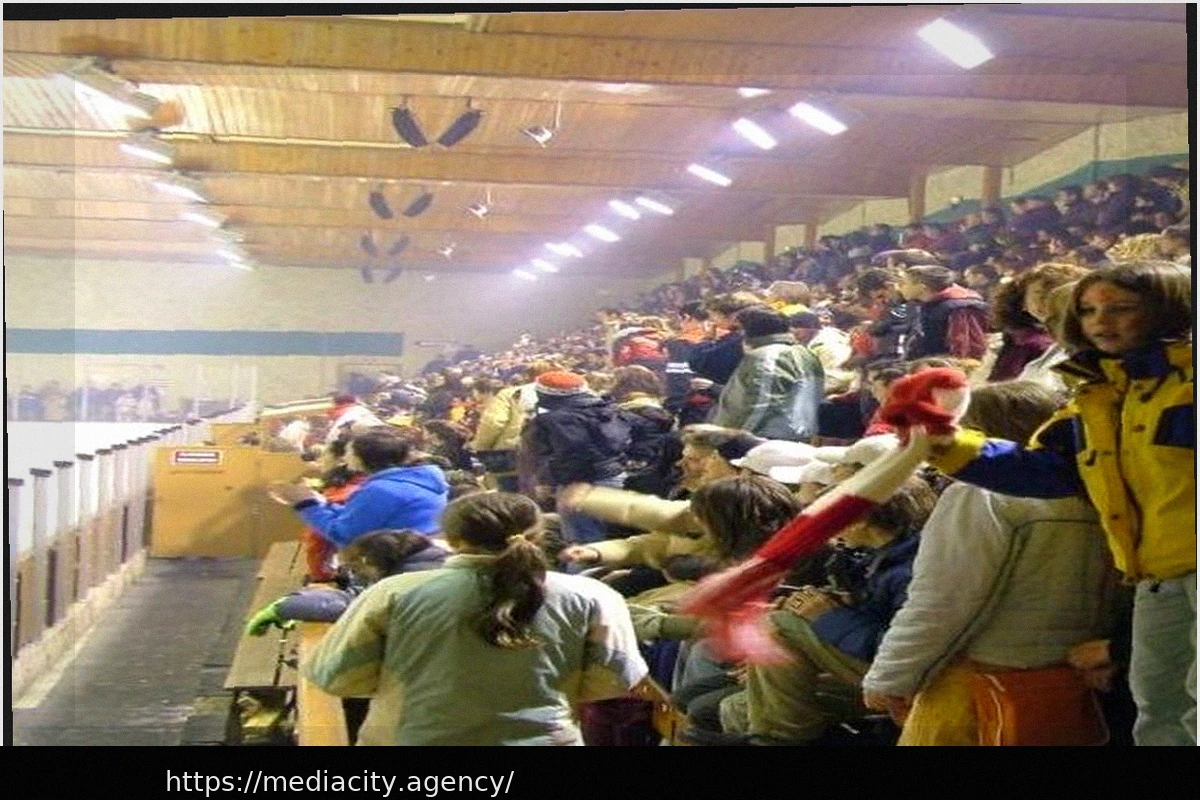
In the 80s and 90s, matches were played in an intensely charged atmosphere. The old rinks, closer to the spectators, generated constant pressure. Nighttime drumbeats at rival hotels, provocative banners, and even tense confrontations were all part of the scene.
However, this rivalry also possessed a profoundly human dimension. Off the ice, players shared experiences, training sessions, and even friendships. “‘More things unite us than divide us,’ it was emphasized during the discussion.”
Over time, Spanish hockey has evolved towards a more professional and respectful environment, yet without losing the competitive essence that makes this matchup special.
The Legacy of a Generation
The Fem Història program achieves more than just recounting results or anecdotes: it builds collective memory. Through the direct voices of protagonists like Pepe Arbués, José Antonio Rivero, Vinny Friyia, Carlos Luz, Salva Barnola, and Antonio Capillas, it retrieves an era when ice hockey in Spain was consolidated thanks to the efforts of clubs, players, and entire communities.
José Manuel Jarne’s figure, far from being the sole focus, acts as a nexus connecting stories, values, and experiences that remain relevant in today’s hockey. His legacy, like that of many others, is reflected today in youth academies, club identities, and the rivalry—now more ‘healthy’—that continues to attract fans.
At a time when the National League enjoys a high level of competition and media attention, looking back allows for a better understanding of the present. And programs like Fem Història become essential tools for preserving that connection.
Listen to Understand
The broadcast of the latest program (which airs in two parts) is not merely an exercise in nostalgia but an invitation to understand Spanish ice hockey from its roots. This invitation is synchronized between two individuals who experience hockey firsthand in the hobby category (in matches between CH Jaca Quebrantahuesos and Stick Cansat/Puigcerdà). Soon available on Radio Puigcerdà and iVoox, this double episode is an indispensable piece for any fan wishing to know the origins of this passion.
Because, as this story demonstrates, hockey isn’t just played on ice: it’s also built with memory, identity, and community.