

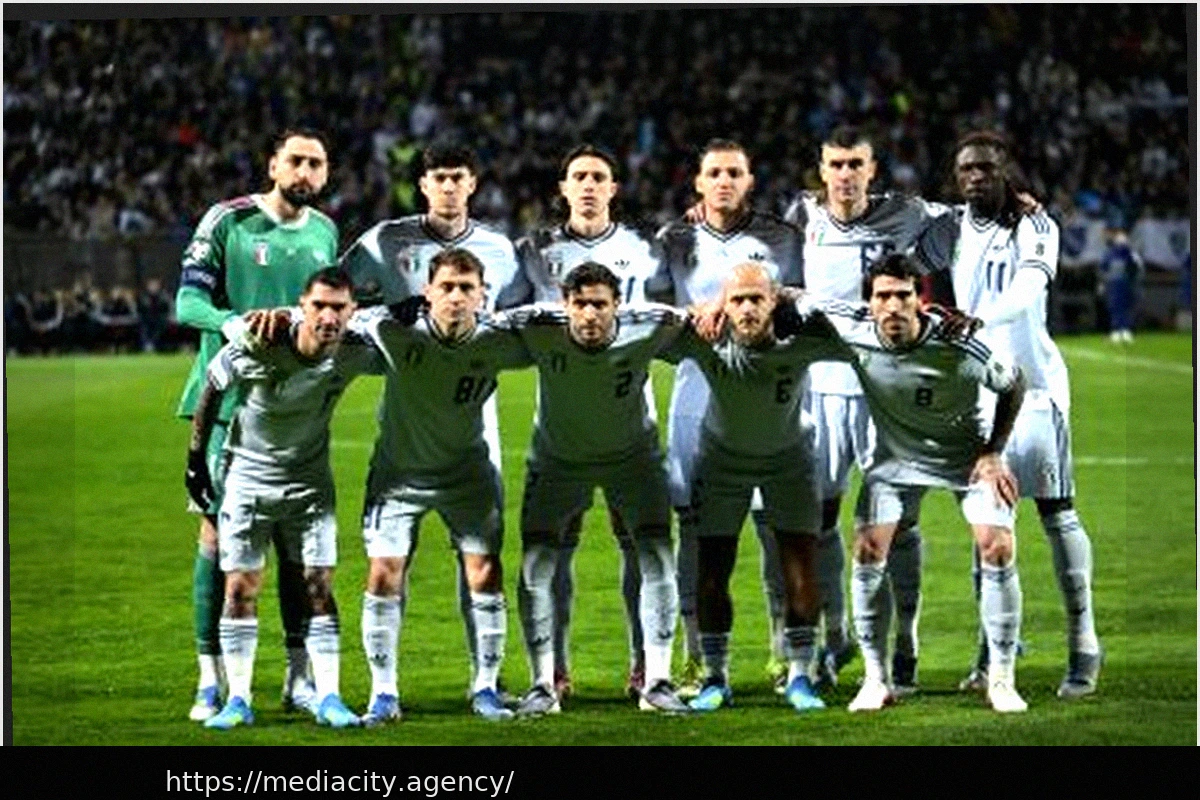
The Italian professional footballers’ association, AssoCalciatori, is advocating for new legislation that would compel Serie A clubs to utilize Italian players. According to president Umberto Calcagno, the current football federation lacks the legal mechanisms to enforce such a mandate, suggesting that political intervention might be the sole avenue for change.
This proposal emerges amidst significant national introspection following Italy’s third successive absence from the World Cup, a timing that is certainly deliberate.
A frequently cited systemic issue within Italian football is the declining presence of Italian players regularly featuring in top-tier starting lineups. The club Como starkly illustrates this trend.
Despite their impressive ascent to Serie A under Cesc Fabregas, Como has fielded an Italian outfield player for a mere single minute throughout the entire season, a statistic that underscores the severity of the problem.
While Como represents an extreme instance, the broader landscape across the league offers only slightly more encouragement, with numerous clubs increasingly relying on foreign talent at all levels of their squads.
AIC Chief Calcagno: “Serie A Needs Reform, Not a War on Foreigners”
Calcagno carefully articulated the proposal, stating via MilanNews: “The federation does not possess the legal instruments to demand that Italians play. We hope that through political channels, regulations addressing this matter can be explored. But let it be clear, this is not a war on foreigners.”
This distinction is crucial. The core argument isn’t that foreign players are detrimental to Italian football; rather, it’s that the dearth of meaningful opportunities for Italian players at club level directly weakens the talent pipeline feeding the national team.
Many prominent figures in Calcio have voiced similar concerns since the defeat against Bosnia, highlighting how promising young Italian players are either entirely sidelined from first-team action in Serie A or compelled to move down to lower divisions to secure consistent playing time.
Calcagno also adopted a forward-looking perspective on the wider restructuring efforts.
“Disappointment must be transformed into positivity,” he remarked. “What’s important now are the programs, reaching a consensus on them, and then we will choose the right leader.”
This clearly indicated that the association’s primary focus is on comprehensive structural reform within Serie A and beyond, rather than immediate discussions about who might replace Gravina or Gattuso.