

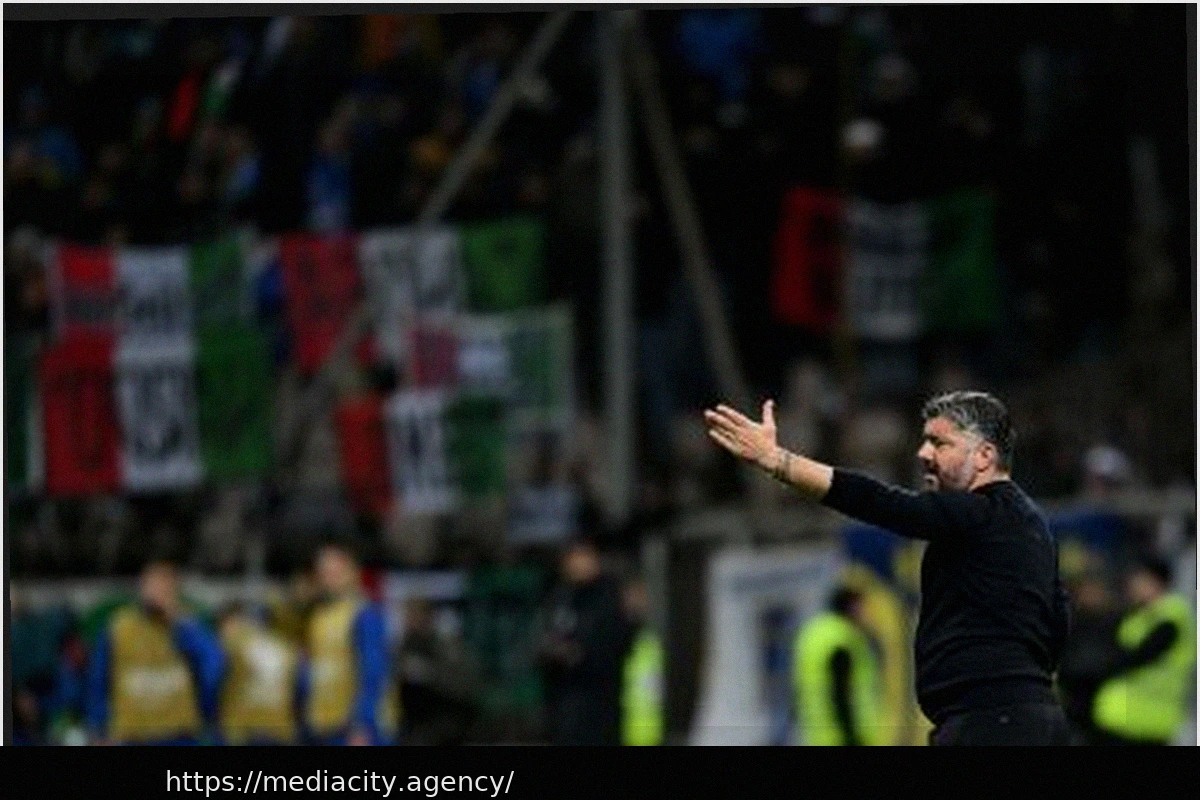
Italy’s elimination from the World Cup play-offs is being dubbed the “Third Apocalypse” by La Gazzetta dello Sport. While acknowledging that blaming only coach Gennaro Gattuso might be “unfair,” the newspaper suggests it’s “difficult to envision the national team moving forward with the coach responsible for such a significant defeat.”
Following Italy’s loss to Bosnia and Herzegovina in the World Cup play-off Final, which bars the Azzurri from the tournament for the third consecutive time, Italian media, notably Gazzetta dello Sport, reflects on the devastating outcome.
This marks Italy’s third successive absence, having previously failed to qualify for the 2018 World Cup under Giampiero Ventura and the 2022 tournament under Roberto Mancini.
Luigi Garlando, a senior writer for Gazzetta, grimly remarked, “The third Apocalypse is terrible because it follows two others.” He lamented the loss of the “sense of shock” previously associated with such a catastrophe, noting that repeated failures are now “becoming normal.” Garlando emphasized that Italy’s third consecutive World Cup absence means “we’ll talk about it in 2030, 16 years after the last participation,” and highlighted that a generation of young Italians will reach adulthood without ever witnessing their national team compete in a World Cup.
Italy initially took the lead with a goal from Moise Kean. However, the match’s momentum shifted dramatically just before half-time when Alessandro Bastoni was shown a straight red card.
Despite other refereeing decisions being contentious, Gazzetta affirmed that Bastoni’s sending off was correct and refrained from attributing blame to the match official for the defeat.
Stefano Agresti echoed this sentiment, stating, “Refereeing mistakes? We made more of them ourselves.” He asserted that Bosnia was simply the superior team and expressed fatigue with constant discussions about improving technique and rhetoric. Agresti declared this “the worst” apocalypse, acknowledging minor grievances like Muharemovic not receiving a red card, but strongly argued against focusing on such “small details” when facing the 71st-ranked team globally. He concluded that Italy “threw the match away ourselves,” conceding that Bastoni’s error was pivotal, but insisting that even with ten players, Italy had scoring opportunities.
The 2020 Euros victory now appears to be an anomaly, as the Azzurri haven’t participated in a World Cup since 2014, nor played a knockout stage match in the tournament since their 2006 triumph.
Agresti further elaborated, “Recent history tells us something clear: the exception, sadly, is not missing the World Cup, but the victory five years ago at Wembley.” He painfully observed that “normality is, sadly, what we saw at the small stadium in Zenica.” While acknowledging Gattuso’s failure in this crucial match, he added that it would be “unfair to blame Rino only,” given that previous coaches like Ventura, Mancini, and Spalletti also encountered similar setbacks, suggesting a deeper systemic issue. Nevertheless, Agresti found it “hard to imagine the national team restarting with the coach who led it to such a serious defeat.”
As of now, no decision has been made concerning Gattuso’s future. Interestingly, neither FIGC President Gabriele Gravina nor Delegation Chief Gianluigi Buffon has offered their resignations.
Gazzetta concluded with a plea, stating, “We have said it many times, in a mix of disappointment, anger, and indignation. We must rebuild the system. We can no longer postpone it.” The newspaper described the situation as an “absolute emergency” demanding “extraordinary measures.” These include strengthening youth sectors and implementing regulations to safeguard Italian players. While acknowledging that such reforms will require “time, the right people, and the right ideas,” Gazzetta stressed the urgency: “But we cannot wait any longer. Otherwise, generations of young people who have never seen Italy at a World Cup will continue to grow.”