

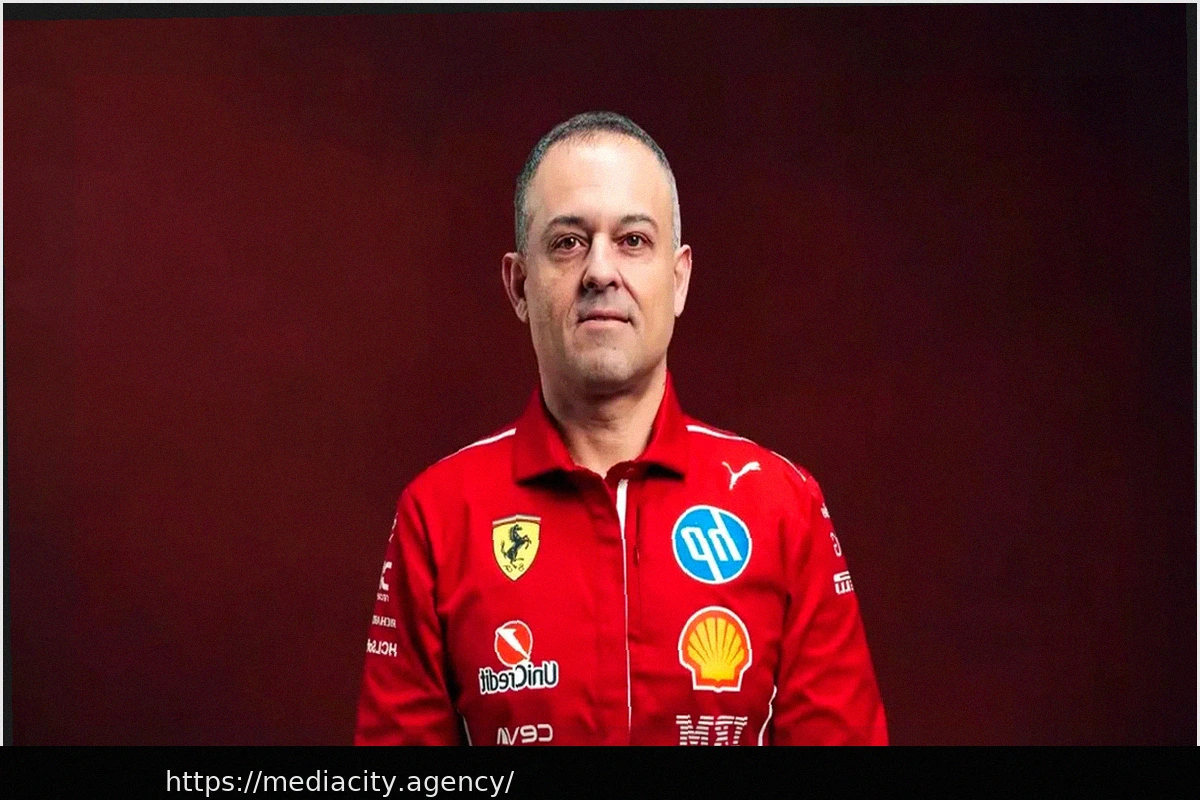
Ferrari’s Sporting Director, Diego Ioverno, has shed light on the multifaceted challenges awaiting Formula 1 teams in the revolutionary 2026 season. Describing it as a complete overhaul, he emphasized that adaptability and the speed of development will be the decisive factors for success in what he calls an “anno zero” for F1.
“By the end of the season, the most successful team will very likely be the one that has developed the most in the shortest time,” Ioverno stated. He added, “2026 is a very particular year for F1. We are changing all the regulations: chassis, tires, sporting regulations. It is therefore a complete reshuffle and a new challenge for all teams.” Among these new challenges, a less discussed but equally complex aspect involves pit stops.
Energy Management: The Qualifying vs. Race Conundrum
A crucial element of the new technical era lies in the strategic management of power unit energy flows, requiring a radically different approach during race weekends. Planning free practice sessions will therefore be fundamental to ensure teams are not caught off guard at critical moments.
“The behavior of the power unit is a key element for performance,” Ioverno explained. “The energy you can charge and the energy you can deploy during a lap is different between qualifying and the race. It will be very important to plan free practice in such a way as to be prepared for both the qualifying and race scenarios.”
Pit Stop Focus: Changes to Drums, Rims, and Wheel Covers
The core operational challenge for Maranello’s mechanics, however, revolves around pit stop execution. This isn’t just about speed but adapting to geometries and components completely revised by the new regulations. Ioverno highlighted technical details that might seem minor but drastically impact the fluidity of tire changes.
“Regarding the execution of pit stops, the challenge is a bit more complex due to some differences in the layout, mainly in the angles,” revealed the Scuderia’s Sporting Director. “The geometries of the wheel drum and the rims themselves are slightly different compared to last year. The wheel cover has a different shape, and this requires a different approach.” These structural changes will force teams into specific training sessions to automate new movements, minimizing the risk of errors in a season where every tenth lost in the pit lane will be extremely difficult to recover on track.