

Ferrari’s recent motorsport season concluded with strikingly divergent outcomes, with the current/upcoming 2026 season already poised to demand immediate results. Following the initial two races of the season in Australia and and China, there’s a prevailing sense that the Scuderia now stands as Mercedes’ primary challenger, though still struggling to entirely bridge the gap with the Brackley team. The Japanese Grand Prix, held on a demanding track vastly different from previous venues, arrives at a critical juncture: on one hand, there’s a need to validate the encouraging signs from early outings; on the other, to ascertain if Maranello’s recent efforts suffice to further close the gap to the top. It is within this context that John Elkann’s remarks, made in his letter to Exor shareholders, review the group’s activities, focusing particularly on motorsport and clearly outlining the dual sporting identity of the Prancing Horse: dominant and victorious in the WEC, yet still unfulfilled in Formula 1.
Ferrari’s Triumph in WEC
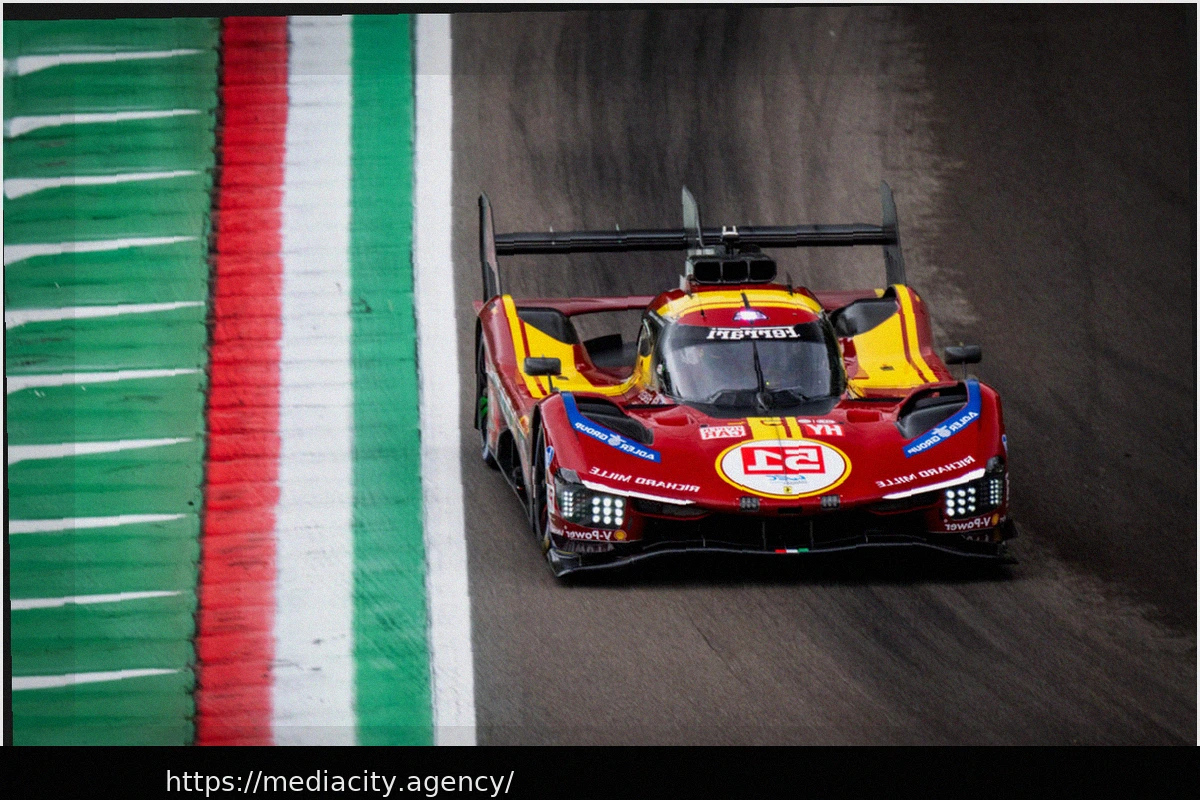
In the section dedicated to Endurance racing, Elkann used unequivocal language to celebrate what he described as an extraordinary year. He stated: “On the sporting front, 2025 delivered both triumphs and lessons. Ferrari experienced an exceptional year in endurance racing, clinching both the Constructors’ and Drivers’ titles in the World Endurance Championship, securing another victory at Le Mans, and winning the GT3 World Cup in Macao.” These words underscore the significance of a project that has, in just a few years, returned to the forefront of the international racing scene, bringing Maranello back to the pinnacle of a category intrinsically linked to the brand’s DNA.
However, the strongest emphasis wasn’t merely on the results themselves, but on their profound significance for Ferrari. Elkann highlighted that these successes occurred “more than half a century since Ferrari’s last world endurance title” and represent the culmination of “an extraordinary team spirit that unites everyone involved, from mechanics in the pit lane to engineers and drivers, all working with shared dedication towards a common goal.” The message is clear: the triumphant return to Endurance racing was not just a technical or sporting decision, but the establishment of a collective project capable of restoring identity and continuity to a racing department that has swiftly regained cohesion and achieved results in this discipline.
Ferrari: The Symbolic Value of Le Mans and the Return to Endurance
Elkann’s reflections also carry a strong symbolic dimension. The Ferrari chairman recalled that the decision to re-enter endurance racing was made “during the challenging period marked by isolation due to COVID,” making the ability to collectively celebrate these achievements even more significant today. In this interpretation, the Hypercar program takes on almost the character of a gamble conceived during a difficult time, which then transformed into one of Ferrari’s most successful sporting endeavors in recent memory.
Unsurprisingly, Elkann also strongly emphasizes the historical weight of the Le Mans success. He noted: “Equally significant is the fact that, following this decision, Ferrari returned to win the centenary edition of Le Mans, fifty years after its last participation in the race, and subsequently achieved three consecutive victories with three different driver lineups, demonstrating the team’s unity and collective strength.” This is arguably one of the most powerful sections of the letter, as it connects the present with the Ferrari legend: the return to La Sarthe, the victory in the centenary edition, and the ability to replicate success with varied crews concretely prove the project’s solidity, extending far beyond a mere one-off achievement.
The Jibe at Formula 1
Inevitably, the tone adopted for discussing Formula 1 was markedly different. Here, Elkann did not mince words, openly acknowledging that the overall outcome could not be considered satisfactory. He stated, “Formula 1, conversely, failed to achieve its ambitions.” This succinct, brief statement is politically very significant. It comes from the group’s top figure and unambiguously illustrates the disparity between Ferrari’s pre-season expectations and the final results.
In essence, this is an acknowledgment that pertains not only to the sporting aspect but also to the team’s identity. Ferrari can celebrate its WEC success and laud it as a display of strength, yet it is inevitably judged primarily by its performance, or lack thereof, in Formula 1. This is precisely why Elkann’s statement carries weight: on one hand, it recognizes the merits of Endurance racing, but on the other, it reiterates that the Formula 1 World Championship remains the central pillar of the Prancing Horse’s sporting prestige.
The broader context, moreover, makes this message even clearer. The 2026 season has begun with Ferrari showing intriguing promise, especially when compared to the rest of the field, but it still needs to demonstrate that it possesses the tools to genuinely challenge Mercedes over the long term. From this perspective, Suzuka will be a crucial step, not so much for delivering definitive verdicts, but for assessing the team’s ability to translate the work done in Maranello into tangible on-track progress. Elkann’s remarks, therefore, arrive at a time when Ferrari is tasked not only with pursuing results but also with sustaining its competitive chase.
Ferrari: Learning from Errors to Return Stronger
However, the key point isn’t solely the admission of unachieved goals. Elkann also strives to outline the approach Ferrari must adopt in response. He affirmed: “But Ferrari has always understood that racing means learning as much as it means winning.” This is where the letter takes on a more strategic and almost cultural tone: disappointment over missed results should not be viewed as a dead end, but as an integral part of a process where mistakes become valuable material for growth.
Fittingly, the chairman directly evokes Enzo Ferrari and what he termed his “museum of errors,” described as “a collection of broken parts gathered in the pursuit of progress.” This is a powerful image, very ‘Ferrarista’ in both language and essence, serving to provide a precise interpretative key for the present: in motorsport, making mistakes doesn’t necessarily mean failure, but rather accumulating experience, understanding, and awareness. Provided, of course, that one truly knows how to move forward from those errors.
Elkann’s concluding thought is, in essence, a message directed at the Formula 1 team. He stated: “This mentality remains fundamental even today: responsibility and determination to return stronger.” This is a clear call to action, bringing together two deliberately chosen words. Responsibility, meaning the ability to acknowledge that the outcome was insufficient. Determination, meaning the will to transform that inadequacy into a tangible response.
The entire political and sporting significance of the letter lies here. Ferrari asserts its success in the WEC, celebrates it as one of the most important achievements of recent years, and uses it as proof of the validity of the teamwork forged in Maranello. At the same time, however, it does not hide the fact that the level achieved in Formula 1 is not enough. Thus, there is no self-congratulation, but a dual message: pride in what has been accomplished in endurance racing, and implicit yet evident pressure on the F1 project.
Ultimately, for Ferrari, the 2025 season (as recounted by Elkann) represents this: a year to remember for Endurance and a year to scrutinize for Formula 1. The triumphs at Le Mans and in the WEC demonstrate that Maranello still possesses the structure, vision, and capability to bring a complex technical program to the top. The real challenge now is to transfer that same collective strength to where it matters most. Because the “museum of errors” can only make sense if it truly leads, sooner or later, to winning again.