

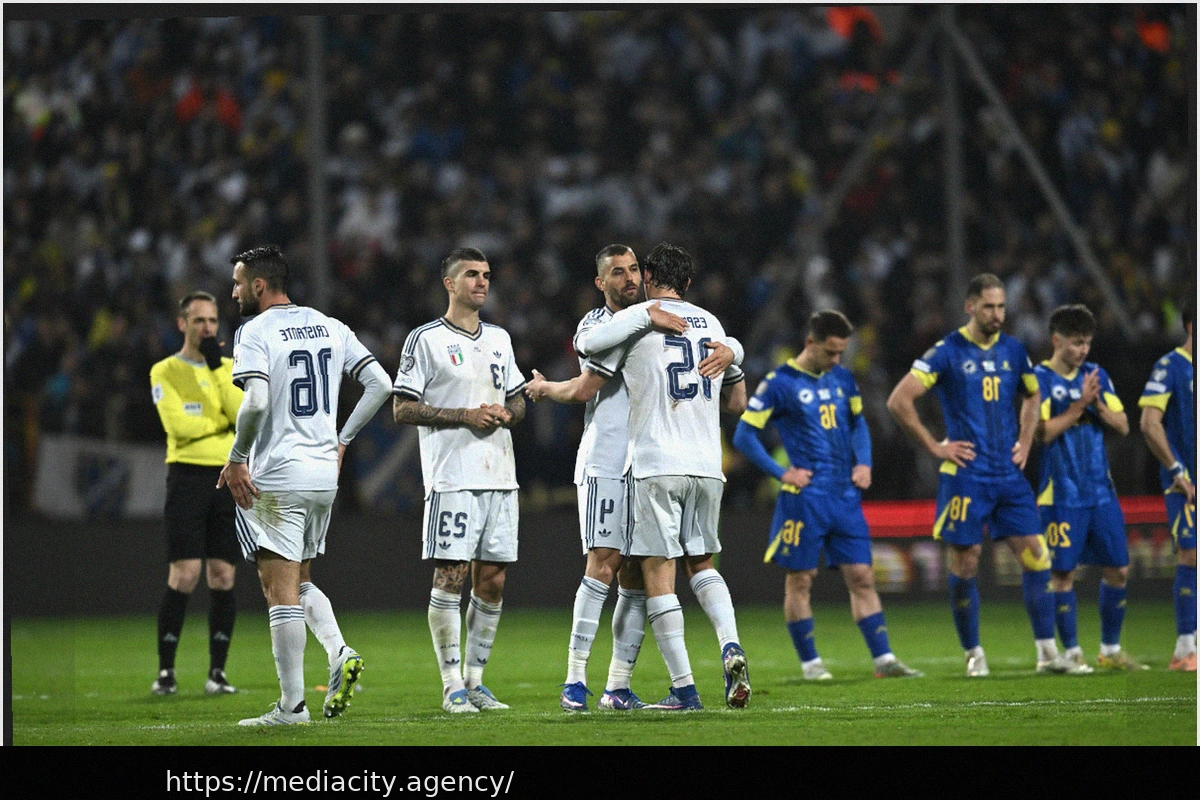
Italy’s hopes for the World Cup were dashed following a penalty shoot-out loss to Bosnia and Herzegovina in Tuesday evening’s play-off final. The defeat was marred by contentious refereeing decisions, including a disputed handball by Edin Dzeko and a potential second red card incident during extra time.
The Azzurri initially took the lead in the 15th minute with a superb strike from Fiorentina’s Moise Kean. However, their fortunes shifted dramatically just before half-time when Inter defender Alessandro Bastoni received a straight red card for a foul on Amar Memic.
Playing with ten men, Italy managed to maintain their lead until the 79th minute. They pushed the game into a penalty shoot-out, but misses from Pio Esposito and Bryan Cristante, coupled with Bosnia converting all four of their initial kicks, led to Italy’s elimination at the World Cup play-off stage for the third consecutive cycle.
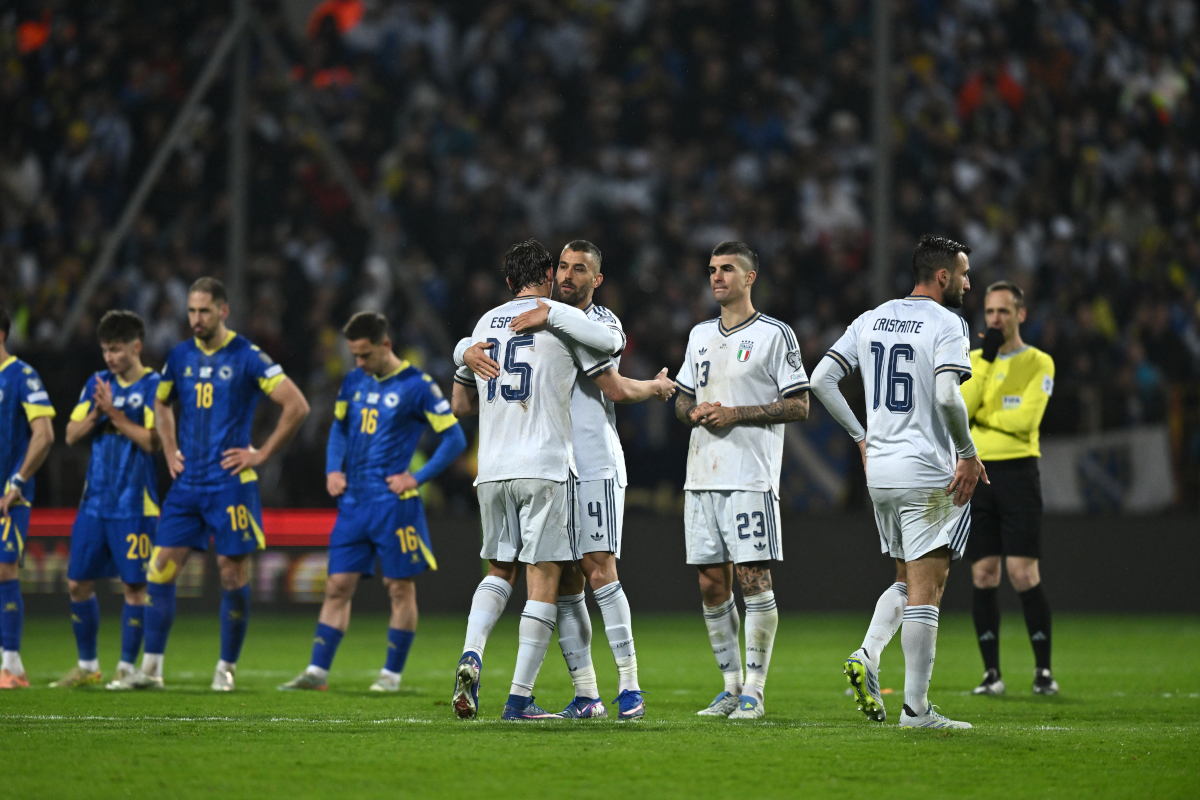
Which Refereeing Decisions Sparked Controversy Against Bosnia?
The primary contentious moment revolved around a handball by Edin Dzeko that preceded Bosnia and Herzegovina’s equalizing goal in the 79th minute.
Following a cross from the right, Dzeko and Gianluca Mancini contested for the ball at the back post. Despite Dzeko’s attempt to head the ball, it visibly struck the arm of the experienced Bosnian forward.
Gianluigi Donnarumma initially saved Dzeko’s effort, but Haris Tabakovic capitalized on the rebound, scoring from close range.
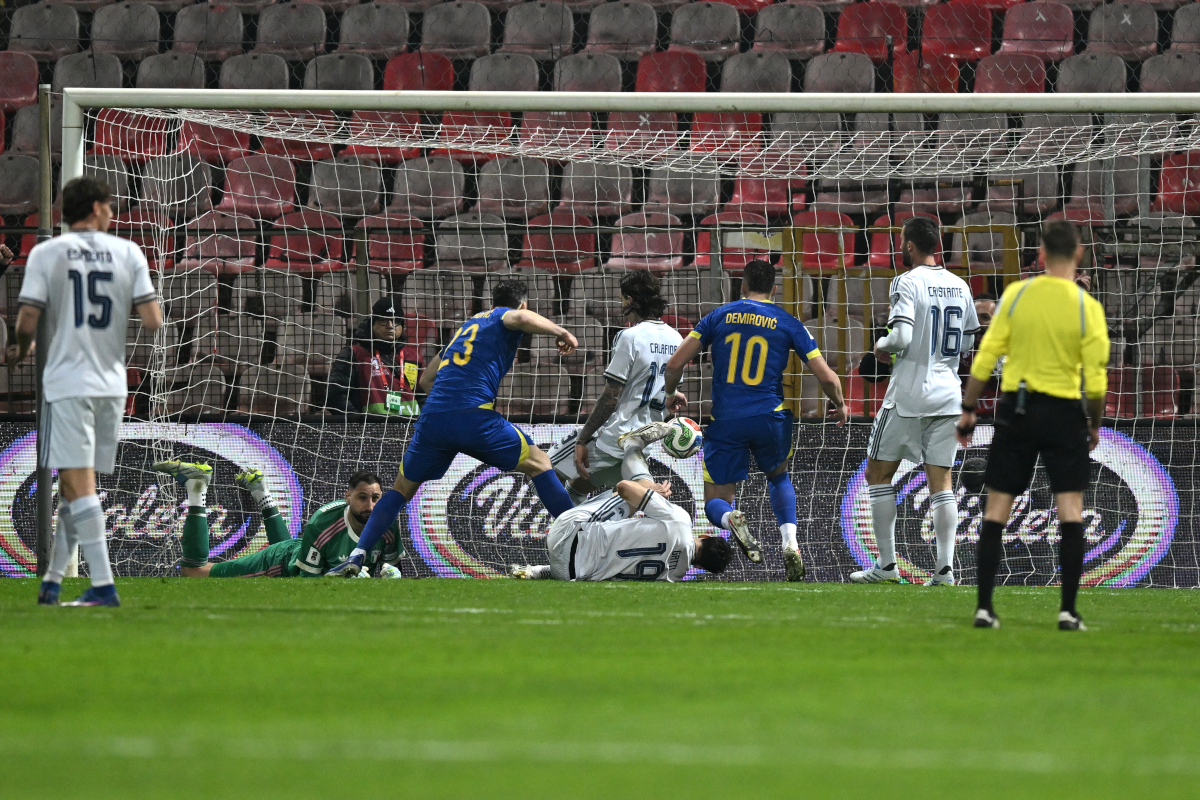
Under IFAB laws, a goal scored directly from the hand or arm, even accidentally, is an offense. This implies that if Dzeko’s initial attempt had gone in without Donnarumma’s save, it would have been disallowed. Nevertheless, since Bosnia did not score directly from Dzeko’s handball, and the incident was presumably deemed accidental, the equalizer stood.
Should Bosnia Have Had a Player Sent Off?
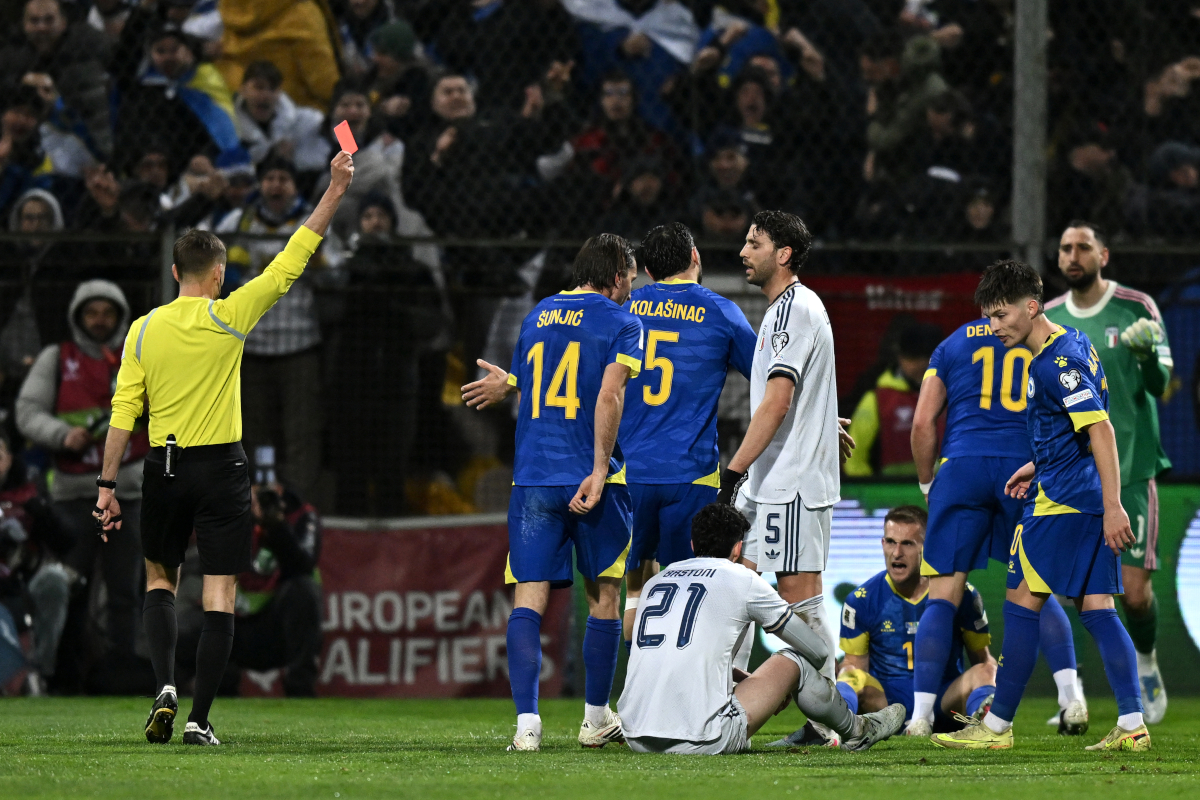
Considering Bastoni’s first-half dismissal for a last-man challenge, many argued that Bosnia should also have been reduced to ten players when Sassuolo’s Tariq Muharemovic fouled Marco Palestra in the 12th minute of extra time.
Sandro Tonali delivered a perfectly weighted through ball to the young full-back, who was then fouled on the edge of the box. Muharemovic received a yellow card for the challenge.
IFAB guidelines for denying an obvious goalscoring opportunity (DOGSO) involve four main criteria: the distance from the foul to the goal, the direction of play, the probability of the player maintaining control of the ball, and the number and position of defenders.
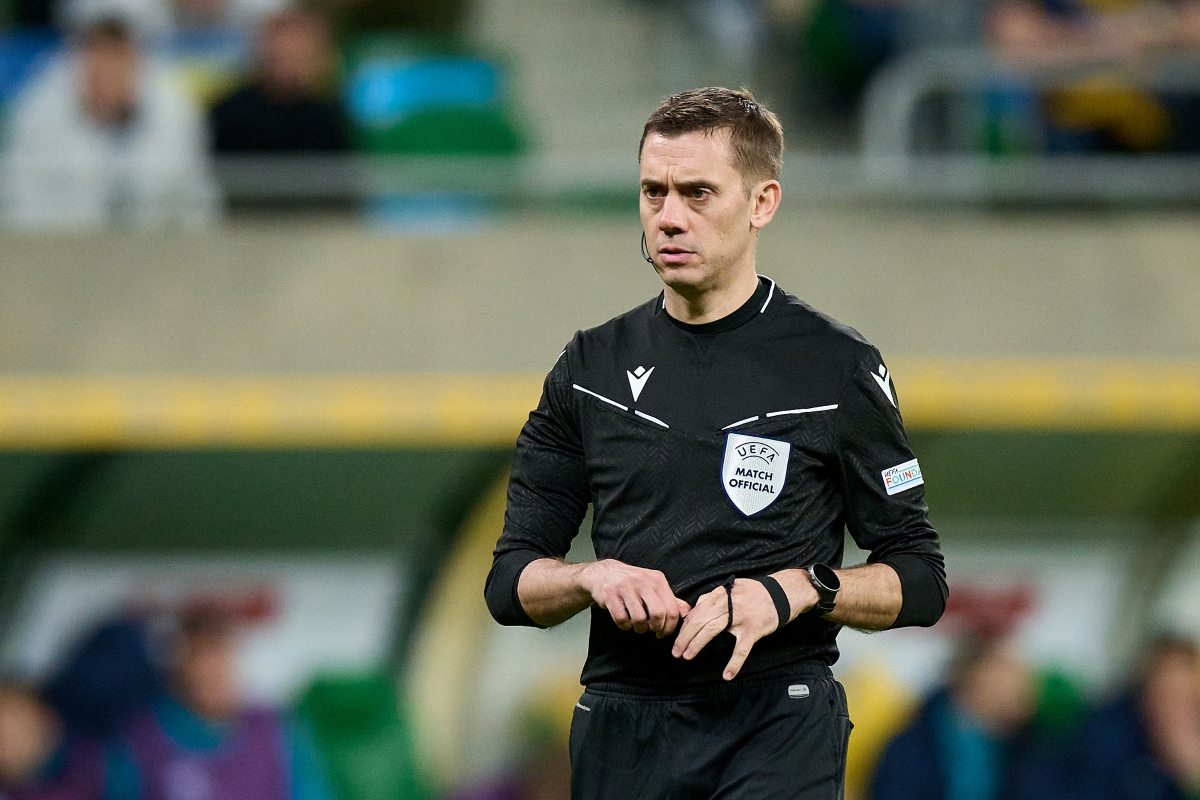
Referee Clement Turpin deemed Bastoni’s first-half foul worthy of a red card, noting that Memic was brought down approximately ten yards outside the penalty area, slightly off-centre, and would otherwise have maintained possession and been in a clear one-on-one situation with Donnarumma.
Regarding Muharemovic’s challenge on Palestra, the young Italian player was also moving towards goal from a central position. However, it is believed that Muharemovic was not considered the last defender due to the presence of midfielder Dzenis Burnic near the incident.