

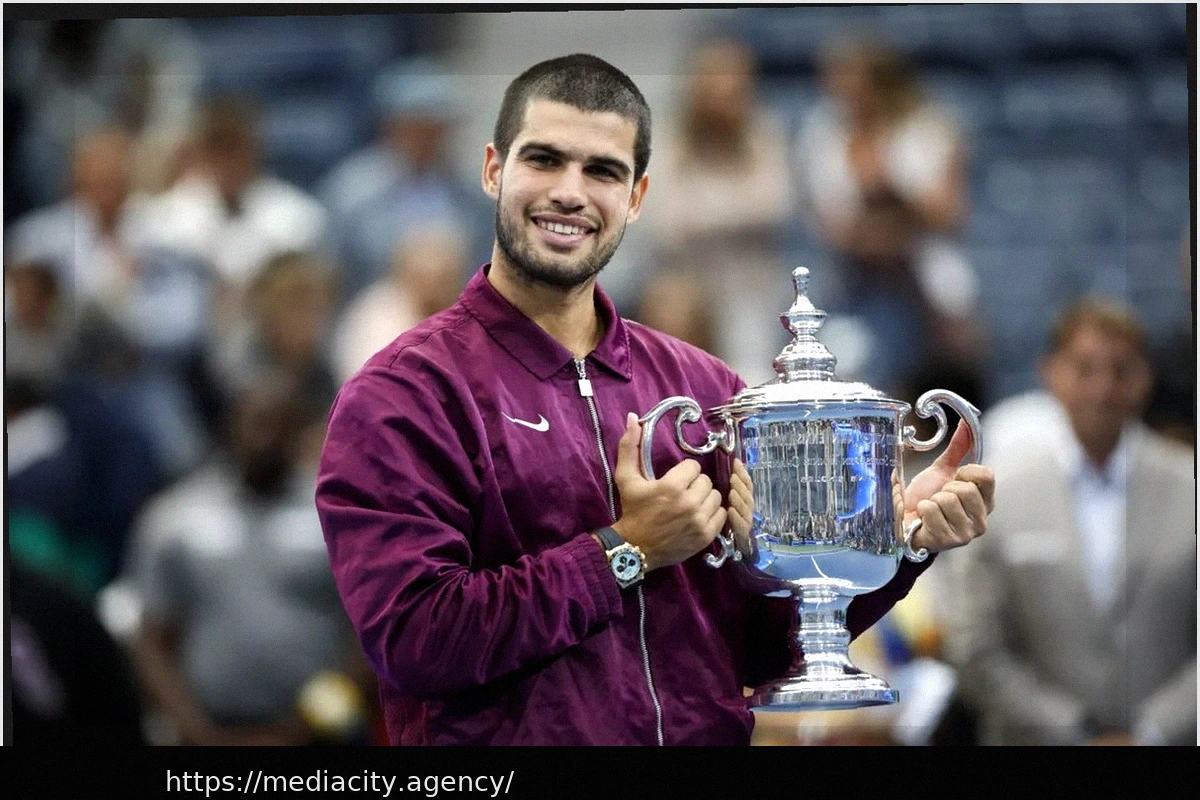
Launched in 2017, the Next Gen ATP Finals presented a straightforward vision: bring together the eight most promising tennis talents under 21 for a competition in Milan, aiming to foreshadow the sport’s future. However, over its six editions from 2017 to 2022, the reality proved significantly more intricate and captivating. This event saw some participants ascend to become global tennis elites, while others retired prematurely without making a significant mark. The majority found themselves in the expansive middle ground between exceptional success and obscurity, a space where the bulk of professional tennis careers typically play out.
This analysis deliberately excludes the 2023 edition onwards, as those fields are too recent for a fair and conclusive assessment. By contrast, the class of 2022 has now had three full years to demonstrate their capabilities, providing sufficient time for their career trajectories to become discernible. What follows is an honest appraisal of the journeys undertaken by every participant across the first six iterations of this unique tournament.
The Next Gen Player Evaluation
Class of 2017
Hyeon Chung (Champion)
Hyeon Chung’s narrative was one of the most compelling in tennis during the 2017-18 winter season. He claimed the inaugural Next Gen trophy with an unblemished record, subsequently making a stunning run to the Australian Open semifinals, even defeating Novak Djokovic. This performance hinted at the dawn of an exceptional career. Regrettably, persistent back injuries have since plagued his development, forcing him to arduous comebacks from outside the top 1,000. His peak ranking was world #21 in May 2018, and he currently stands at 404th. His journey serves as a poignant illustration of a promising career cut short by injury, highlighting how often the disparity between raw talent and physical resilience dictates the ultimate fate of many tennis aspirations.
Andrey Rublev (Runner-Up)
Rublev has secured over 20 ATP titles, reached a career-best ranking of world #5, and consistently maintained a presence within the top ten for several years. While he has yet to win a Grand Slam, and his performances in crucial matches have often been a source of frustration, his overall career progression perfectly embodies the kind of talent the Next Gen initiative aimed to identify and promote.
Daniil Medvedev (Semifinalist)
Medvedev proceeded to achieve the world #1 ranking and clinched the 2021 US Open. Already 21 at the 2017 event, he barely seemed like an emerging talent even then, exuding the self-assuredness of a player keenly aware of his own formidable abilities. By any standard, he is a generational talent who has excelled remarkably and continues to perform strongly nearly a decade later.
Karen Khachanov (Round Robin)
Khachanov boasts seven ATP titles, including the prestigious 2018 Paris Masters, and reached a career high of world #8. He is a robust, resilient, and consistent competitor. Though he never quite broke into the absolute elite, he was a legitimate top-fifteen player for many years and represents the reliable professional essential for any tour. Currently ranked in the high teens, he remains an active presence on tour.
Denis Shapovalov (Round Robin)
Shapovalov stands out as the biggest source of unfulfilled promise from this cohort. He possessed one of the most electrifying games of his generation, featuring a one-handed backhand that inspired genuine admiration, coupled with a captivating personality that made his matches must-watch viewing. He reached a career high of world #10 and a Wimbledon semifinal in 2021. However, a combination of injuries, inconsistency, and an inability to solidify his game identity has seen his trajectory falter. A career that once hinted at Grand Slam glory has primarily delivered a few memorable weeks and a lengthy succession of early exits, though he continues to compete, currently ranked 38th.
Borna Coric (Round Robin)
The Croatian has arguably extracted more from his career than many initially anticipated. In 2022, as world #152, he astonishingly won the Cincinnati Masters, becoming the lowest-ranked player ever to claim a Masters 1000 title, and achieved a career high of #12. Shoulder surgery in 2021 effectively sidelined him for two years, and he has yet to fully recover his peak form. In his late twenties, he is currently battling to regain his ranking on the Challenger circuit, hoping to improve upon his current 178th position.
Jared Donaldson (Round Robin)
Donaldson’s career apex arrived in 2018 with a semifinal appearance in Acapulco, reaching world #48, before persistent knee issues brought it to an abrupt end. He played his final match against Rublev at Indian Wells in 2019, officially retired in 2021, and has since pursued university studies and embarked on a coaching career. A brief period of promise tragically cut short by injury at the age of 22.
Gianluigi Quinzi (Wildcard)
The Italian wildcard officially retired from professional tennis in 2021, citing the overwhelming pressure of high expectations and competitive stress. He achieved a career high around 147th and won two Challenger titles. His story serves as a stark warning about the profound burden placed upon young players labeled as prodigies when their anticipated results fail to materialize on schedule.
Class of 2018
Stefanos Tsitsipas (Champion)
Tsitsipas epitomizes what the Next Gen initiative aimed to showcase. He went on to win the ATP Finals the very next year, reached a career high of world #3, secured the Monte Carlo Masters three times, and made it to the French Open final. While a Grand Slam title remains elusive, and a back injury in 2025 has raised questions about his long-term prospects, he has largely met the lofty expectations set for his career.
Alex de Minaur (Runner-Up)
Now ranked world #6, de Minaur has meticulously forged his path to genuine elite status through sheer athletic determination and consistent, year-on-year improvement, largely without excessive hype or controversy. He has claimed multiple titles, including Queen’s Club, and reached Grand Slam quarterfinals. No other player in this class, and arguably across any of the five editions, has demonstrated greater consistency over such an extended period.
Frances Tiafoe (Round Robin)
Tiafoe secured the first ATP title among this entire class at Delray Beach in 2018 and has since navigated a career characterized by extraordinary highs and frustrating plateaus. His run to the 2022 US Open semifinals firmly established him as a legitimate contender, yet he has struggled to build on that consistently. Reaching a career high of world #10, he currently resides in the low twenties. Far from a failure, he nonetheless hasn’t quite evolved into the player many believed he could become.
Taylor Fritz (Round Robin)
Currently world #7, Fritz is now a well-established top-ten fixture and stands as the premier American male player. His appearance in the 2024 US Open final marked the pinnacle of a career defined by steady progress rather than explosive breakthroughs. A late bloomer who continued to flourish, he offers one of the most compelling arguments for patience in player development.
Hubert Hurkacz (Round Robin)
Hurkacz ascended to world #7 and enjoyed a strong Wimbledon campaign in 2021, notably defeating Federer in straight sets in the quarterfinals. He added a Masters title in Miami and multiple Grand Slam quarterfinal appearances to his resume. He represents a clear success story from this group, even if a 2025 shoulder surgery has introduced uncertainty about his future.
Jaume Munar (Semifinalist)
Munar won a Challenger title in his home country and spent several years fluctuating between the 50-80 ranking range, striving to become a consistent top-50 presence. However, he recently achieved a career high of 33, currently playing the best tennis of his career. Not a disastrous outcome, but his ultimate ceiling may have been lower than initially perceived.
Liam Caruana (Wildcard)
The Italian wildcard never managed to break through at the main tour level. His career peaked around 370th in the world, and he spent the majority of his professional life competing on the Challenger and ITF circuits. He represents the weakest entry in an otherwise very strong class, retiring in 2021.
Class of 2019
Jannik Sinner (Champion/Wildcard)
Currently world #2, a four-time Grand Slam champion, and a former world #1. Sinner entered the draw as an 18-year-old Italian wildcard with barely a ranking to his name, yet proceeded to win the entire tournament. Everything that has transpired since has been an almost perfectly linear ascent, marking one of the most direct rises in the sport’s history. He represents the single greatest return on investment the Next Gen Finals ever yielded.
Casper Ruud (Round Robin)
Ruud reached three Grand Slam finals, including consecutive French Open finals in 2022 and 2023, though he has yet to win one. He achieved a career high of world #2. By any reasonable measure, he has had an excellent career, defined by his clay-court prowess despite some limitations on hard courts (though he was a US Open runner-up). Currently ranked 12th in the world, he remains a formidable opponent on his preferred surface.
Miomir Kecmanovic (Semifinalist)
Kecmanovic has carved out a respectable career within the top 30 without ever seriously challenging for the top ten. He is a solid professional who has made the most of his abilities. His current ranking typically hovers in the 50-60 range. He holds two ATP titles from Kitzbühel and Delray Beach, but his career lacks significant other highlights.
Ugo Humbert (Round Robin)
Humbert has developed into a genuine top-twenty player, securing titles and reaching Masters quarterfinals. As a lefty with an impressive serve, he has likely slightly surpassed what his initial career trajectory suggested he would achieve. He can be considered a quiet overachiever from this class.
Alejandro Davidovich Fokina (Round Robin)
Currently ranked 17th in the world, Davidovich Fokina has spent time within the top 20 and established himself as a consistent presence at that level. His performance has been better than expected for a player who initially entered this tournament as an alternate. He is solid, though he has not quite threatened the sport’s upper echelon.
Mikael Ymer (Round Robin)
Ymer won four Challenger titles that year, translating that form into his appearance at this event. He reached a career high of 50th in the world but never consistently broke into the top 50. Ultimately, his career became defined more by a doping suspension than by his tennis achievements, a sad conclusion to an otherwise underwhelming story.
Class of 2021
(The event was not held in 2020 due to COVID.)
Carlos Alcaraz (Champion)
World #1. Seven Grand Slam titles. A Career Grand Slam completed by age 22. Alcaraz is unequivocally the greatest single outcome the Next Gen Finals ever produced. He won the tournament undefeated at 18 and then dedicated the subsequent four years to becoming arguably the most complete player on the planet. There is nothing more to add that the sport has not already resoundingly proclaimed for him.
Sebastian Korda (Runner-Up)
Korda’s journey has been extensively covered, particularly after his recent Miami victory over Alcaraz. With a career high of 15 and still ascending, injuries have unfortunately deprived him of crucial development years. However, in 2026, he increasingly appears to be realizing the potential the tennis world always foresaw. His story is still actively unfolding.
Holger Rune (Round Robin)
Rune has claimed several titles, including the Paris Masters, reached a career high of world #4, and defeated numerous top players in memorable encounters. His talent has never been questioned. However, his consistency and temperament have frequently been legitimate sources of concern. While his career has so far promised more than it has consistently delivered, at 22, he is undeniably far from a finished product.
Brandon Nakashima (Semifinalist)
Nakashima went on to win the 2022 Next Gen Finals and climbed to a career high of world #29. He has spent most of his career in the 40-80 ranking range. He is a solid professional who has found his consistent level and appears comfortable within it.
Lorenzo Musetti (Round Robin)
Currently world #5, Musetti represents the most impressive development story from this class, outside of Alcaraz. He has transformed from an inconsistent and sometimes erratic clay-court prospect into a genuine top-five fixture. Only time will reveal the full extent of his potential, but he is clearly far from reaching his peak.
Sebastian Baez (Semifinalist)
Baez is a dedicated clay-court specialist who has won multiple titles on his preferred surface, building a consistent career within the top 40. He rarely poses a threat on hard courts or grass. He has precisely evolved into the player his game style suggested he would become, which serves as both a commendation and a limitation.
Juan Manuel Cerundolo (Round Robin)
Cerundolo has secured an ATP title and broken into the top 100, making him a respectable success story from the lower half of this draw. Currently ranked within the top 100, he continues to develop his game.
Hugo Gaston (Round Robin)
Gaston, an anachronistic player in some ways, had his moments against top opponents but never consistently remained within the top 50. His career peaked around 58th. He is perhaps less remembered for his tennis achievements than for instances of questionable sportsmanship.
Class of 2022
Jiri Lehecka (Runner-Up)
Currently ranked 22nd in the world, Lehecka has won titles, consistently defeated top-ten players, and established himself as a genuine top-twenty presence. He represents one of the stronger outcomes from this edition, and his ultimate ceiling may not yet have been fully realized.
Jack Draper (Semifinalist)
Draper is currently ranked 26th in the world, having reached a peak of #4. He won Indian Wells and made deep runs in several other events. A series of injury woes unfortunately disrupted a fascinating ascent, but time is on his side, and his inherent talent has not diminished. The story is far from over.
Dominic Stricker (Semifinalist)
Stricker was exceptional at this event, notably defeating the two highest-ranked players in the field and serving 20 aces in a single match. However, a wrist injury sidelined him for most of 2023 and 2024. He is still actively striving to piece his career back together. The potential was undeniably real; the injuries, however, have been brutal.
Matteo Arnaldi (Round Robin)
Arnaldi broke into the top 30 and secured a couple of Challenger titles. This marks a solid progression for the last man to enter the Milan draw. Currently ranked 101st, his story still has many chapters left to be written at 25 years old.
Chun-Hsin Tseng (Round Robin)
Tseng achieved a career high of 83rd. He is a consistent Challenger-level player who has struggled to make a sustained transition to ATP-level success. His ceiling appears to have been reached, at least for the time being.
Francesco Passaro (Round Robin)
Passaro has generally hovered between 100th and 130th in the world, peaking at 89th. He has not yet achieved a significant breakthrough at the ATP level. He currently holds the weakest results among the players from the 2022 class.
The Final Assessment
The final assessment reveals a more complex reality than either ardent supporters or harsh critics of the event typically admit. The Next Gen Finals saw the participation of future stars like Sinner, Alcaraz, Medvedev, Rublev, Tsitsipas, de Minaur, Fritz, Hurkacz, and Musetti – essentially a who’s who of the contemporary tour. Yet, it also featured players such as Gianluigi Quinzi and Liam Caruana, who barely registered on the main tour. The event did not engineer these divergent outcomes; rather, it merely brought all these talents together at a crucial juncture in their careers and allowed the passage of time to reveal their true paths.
Above all, what these five editions powerfully demonstrate is that tennis performance at the age of 20 is a deeply unreliable predictor of performance at 25. The players who triumphed in the tournament have experienced dramatically different career trajectories. Conversely, several players who exited in the round robin stages have, in many instances, completely surpassed the champions. The sole consistent observation is the absence of a consistent pattern. This could be viewed either as a damning indictment of the event’s predictive accuracy or as its most honest revelation about the sport it attempted to forecast.
Most likely, it is both.